A self-care routine that only works on a quiet Sunday is not really a routine. It is a nice idea. Real self-care has to fit the days when the laundry is not done, your phone is full of messages, your period is due, sleep was broken, work is loud, family needs something, and you do not have the energy to become a whole new person before breakfast.
That is why the best self-care routine is not the prettiest one. It is the one you can return to. It is small enough for a hard day, flexible enough for a changing body, and kind enough that missing a step does not make you feel like you failed.
PeriodlyWise stands for that kind of care: practical, body-aware, positive, and free from shame. Your body is not an interruption to your life. Your routine should make room for the body that is actually living it.
Why most self-care routines fall apart
Many self-care plans are built for an imaginary day. They assume you wake up on time, feel emotionally steady, have the right groceries, have privacy, have no cramps, have no commute, have no caregiving, and have a perfectly clear evening. When real life shows up, the routine suddenly feels too fragile.
The problem is not that you lack discipline. Often, the routine was designed without enough respect for friction. Friction is anything that makes care harder: pain, low appetite, poor sleep, heavy flow, long work hours, stress, low mood, a messy room, social pressure, limited money, lack of privacy, or simply being tired.
A better routine starts by asking a different question. Not, "What would my ideal life look like?" but, "What kind of care can survive my real life?"
The real-life self-care test
Before adding anything to your routine, test it against five questions.
| Question | Why it matters | Example adjustment |
|---|---|---|
| Can I do a tiny version? | Hard days need an entry point. | Instead of a full workout, stretch for two minutes or choose rest. |
| Can I restart without guilt? | Routines fail when one missed day becomes shame. | Use "next caring step" instead of "start over Monday." |
| Does it respect my body state? | Energy, pain, sleep, period timing, and stress change. | Use a soft version before your period or on heavy-flow days. |
| Does it reduce friction? | Self-care should make life easier, not more complicated. | Keep water, snacks, products, medication, or heat support where you actually use them. |
| Does it feel kind? | Care that sounds like criticism is hard to keep. | Replace "I must fix myself" with "What would support me today?" |
Start with anchors, not aesthetic
An anchor is a small care action that steadies the day. It does not need to be beautiful, expensive, or impressive. It just needs to help.
Most real-life routines work better when they include a few anchors from these areas:
- Body basics: water, food, bathroom, warmth, medication if safe or prescribed, comfortable clothing, and rest.
- Mind basics: a short pause, breathing, one honest priority, fewer early decisions, and one supportive message if needed.
- Cycle basics: period window check, products ready, flow notes, pain support, skin comfort, sleep, and what helped.
- Environment basics: a clearer bedside table, a packed pouch, clean underwear, a charging cable, easy breakfast, or a quiet corner.
- Connection basics: telling someone you need a slower day, asking for help, or choosing less explanation with safer people.
If that sounds plain, good. Plain is often what lasts.
Build three versions instead of one perfect routine
A routine that fits real life needs versions. Your body and schedule do not ask for the same kind of care every day.
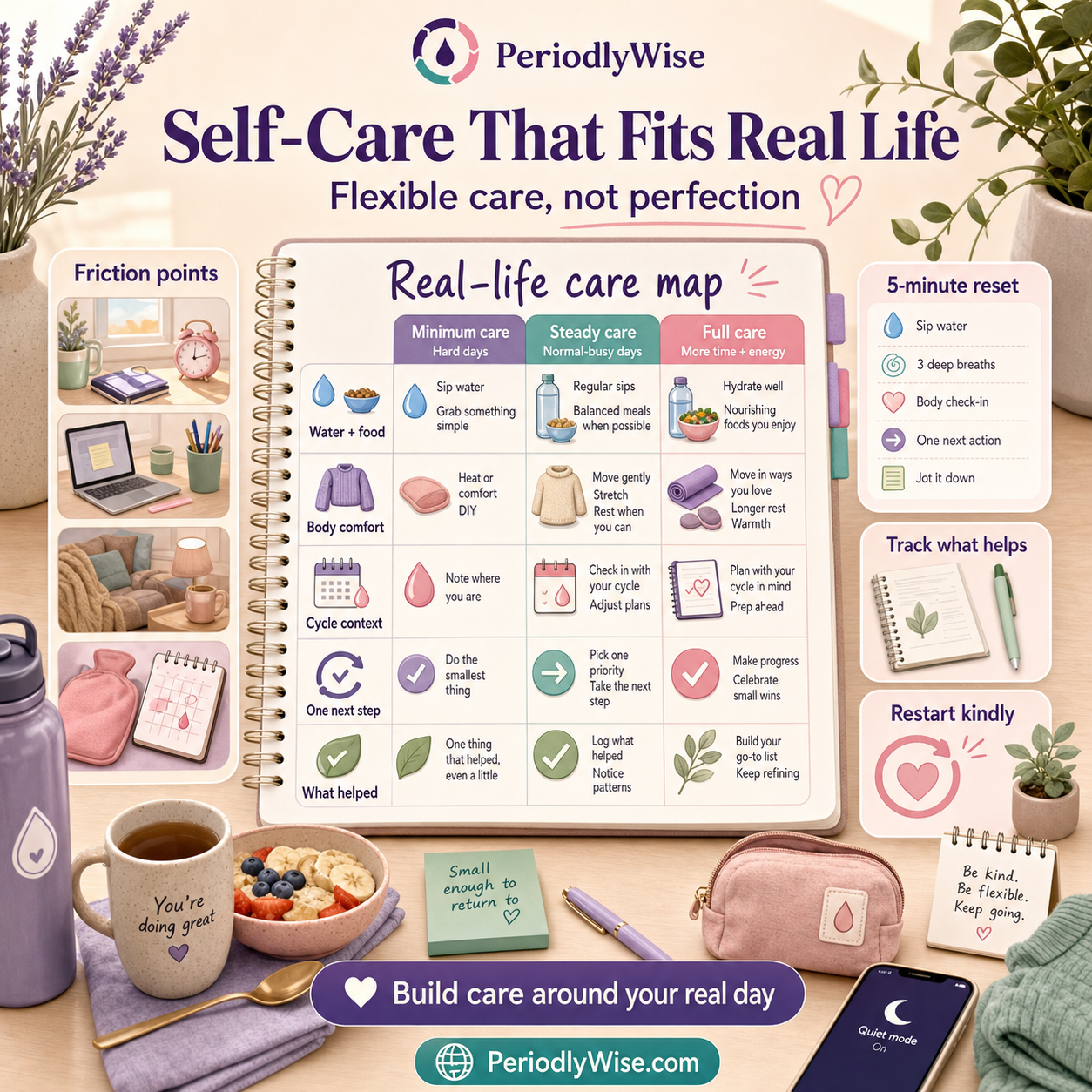
| Version | Use it when | What it might include |
|---|---|---|
| Minimum care | You are exhausted, rushed, in pain, overwhelmed, or on a difficult period day. | Water, bathroom, period products if needed, simple food, one priority, and one next step. |
| Steady care | The day is normal-busy and you need structure without pressure. | Breakfast, short movement or stretch, quick cycle check, planned product pouch, and a realistic to-do list. |
| Full care | You have more time, privacy, and energy. | Movement, meal prep, journaling, longer rest, tidy reset, social connection, and planning ahead. |
The minimum version is not the weak version. It is the version that keeps care alive when life is heavy.
Use swaps, not rules
Rigid rules can make self-care feel like another performance. Swaps are gentler because they keep the purpose while changing the size.
- If you cannot cook: assemble something simple, use leftovers, choose soup, toast, fruit, yogurt, rice, eggs, or another safe familiar option.
- If you cannot exercise: walk slowly, stretch in bed, do shoulder rolls, or let rest be the care.
- If you cannot journal: write one line in PeriodlyWise: "low energy, heat helped" or "period due, packed products."
- If you cannot clean: clear one surface, collect laundry in one place, or set tomorrow's essentials near the door.
- If you cannot meditate: take five slower breaths, sit with your feet on the floor, or loosen tight clothing.
The NHS describes breathing exercises as something that can be done in a few minutes and in different positions. That spirit matters: useful care is allowed to be simple and portable.
Make room for the menstrual cycle without making everything about it
The Office on Women's Health notes that menstrual-cycle hormones can affect health emotionally, mentally, and physically. PMS can include symptoms such as bloating, headaches, mood changes, tiredness, sleep changes, appetite changes, anxiety, digestive changes, and trouble concentrating. For some people, symptoms are mild. For others, they affect daily life.
That does not mean every hard day is hormonal. It means cycle timing can be one piece of context. If your self-care routine keeps failing during the same week each month, the routine may not be wrong, but it may need a period-week version.
You can keep it light. Open PeriodlyWise, check your estimated period window, and ask what would reduce surprise: products, pain support, softer clothes, backup underwear, easier meals, earlier sleep, fewer nonessential plans, or a note about what helped last time.
For more on gentle cycle awareness, read When Period Tracking Feels Like Self-Care. If tracking starts to feel too intense, read Learning Your Cycle Without Obsessing Over It.
Design your routine around friction
Instead of asking, "What self-care habit should I add?", ask, "Where does my day usually get harder?" Then build support there.
| Friction point | What it can look like | Real-life support |
|---|---|---|
| Mornings | Rushing, skipping food, low energy, cramps, or decision fatigue. | A water bottle, one breakfast option, comfortable clothes, and one priority. |
| Work or school | Leaks worry, no products, bathroom planning, fatigue, or overstimulation. | A small period pouch, snack, pain support if safe, and a private note about symptoms. |
| Evenings | Scrolling, late meals, stress, low patience, or skipped hygiene. | A 10-minute reset, warm shower, packed bag, simple food, and a sleep cue. |
| Period days | Heavy flow, cramps, low appetite, skin irritation, or emotional sensitivity. | Product plan, heat, fluids, soft clothing, flexible tasks, and tracking what helped. |
If mornings are your hardest place, read Creating a Calm Morning Routine That Respects Your Body. If you want small period-specific habits, read Small Period Habits That Make You Feel More in Control.
The five-minute reset
Keep one reset for days that begin badly or drift off track. It should be short enough that you can do it in a bedroom, bathroom, office, car, or hallway.
- One minute: drink water or make a warm drink.
- One minute: breathe slowly or sit with both feet on the floor.
- One minute: check body comfort: pain, hunger, flow, fatigue, tension, or bathroom needs.
- One minute: choose the next caring action, not the whole life plan.
- One minute: save a short note if it would help future you.
This reset is not magic. It simply interrupts the feeling that the whole day is already lost.
Track only what changes care
Self-care tracking can become too much if you try to measure everything. Keep the notes practical. Track what helps you make better decisions.
- Cycle timing: estimated period window, PMS timing, period start, or period day.
- Body comfort: cramps, headache, bloating, nausea, skin comfort, dizziness, fatigue, or heavy flow.
- Energy and mood: low, steady, sensitive, anxious, patient, foggy, or overwhelmed.
- Care actions: food, water, heat, rest, movement, medication if safe, support, product changes, or earlier sleep.
- Outcome: what helped, what did not, and what you want ready next time.
This is where PeriodlyWise becomes more than a date tracker. It can help you turn scattered body cues into a kind, usable care pattern. For a wider view, read How Cycle Awareness Can Make Daily Life Feel Less Random.
Watch for self-care that becomes self-criticism
Self-care should not sound like punishment. If your routine makes you feel guilty, smaller is better. If tracking makes you anxious, track less. If a wellness tip makes you ignore pain or shame your appetite, it is not serving you. If your body needs rest, rest is not laziness. If your period changes your capacity, that is context, not character.
The NHS mental wellbeing guidance includes practical ideas such as support, activity, sleep, and managing stress. Those ideas are meant to support life, not turn life into a checklist. A good routine should help you feel more steady and more human, not more monitored.
When self-care is not enough
Self-care is useful, but it is not a substitute for medical care, mental health support, safe relationships, rest, money, housing, or community. Seek medical advice if period pain is severe or worsening, bleeding is very heavy, you feel faint or short of breath, fatigue is persistent, symptoms are sudden or new, or daily life is repeatedly disrupted.
Seek mental health support if low mood, anxiety, panic, body distress, eating concerns, hopelessness, or thoughts of self-harm feel intense, persistent, unsafe, or hard to manage. You deserve more than a routine when the problem needs real support.
FAQ
What is a realistic self-care routine?
A realistic self-care routine is a flexible set of small habits that support sleep, food, hydration, body comfort, emotional steadiness, cycle context, and daily responsibilities without requiring perfection.
How do I start self-care when I am busy?
Start with one anchor: water, food, a two-minute reset, comfortable clothing, a packed period pouch, or one honest priority. Keep it small enough to repeat.
Can period tracking be part of self-care?
Yes. Period tracking can help you notice patterns in timing, energy, flow, pain, mood, sleep, and what helped. It should feel supportive, not obsessive.
What if I miss my routine?
Restart with the next caring step. A routine that fits real life must allow missed days, busy days, period days, and low-energy days.
When should I get professional help?
Seek help for severe pain, very heavy bleeding, dizziness, shortness of breath, persistent fatigue, unsafe mood symptoms, eating concerns, or anything sudden, persistent, disruptive, or worrying.
Use PeriodlyWise to notice cycle timing, energy, symptoms, comfort needs, and what actually helps you feel steadier in daily life.
Open the Period Tracker