Feeling more in control during your period does not mean controlling your period. The body is not a calendar app. Flow can change, cramps can arrive at inconvenient times, sleep can be lighter, appetite can shift, emotions can feel closer to the surface, and plans can need adjustment.
Real control is softer and more practical. It is having enough information, supplies, comfort options, and self-trust to meet the next moment. It is knowing where your products are. It is remembering what helped last time. It is choosing looser clothes on a heavy day without apology. It is tracking a symptom because you care about yourself, not because you are ashamed of your body.
Periods are natural. They should not be treated as a secret, a failure, or something that makes you less capable. PeriodlyWise stands with everyone in this natural journey by helping small habits become everyday support.
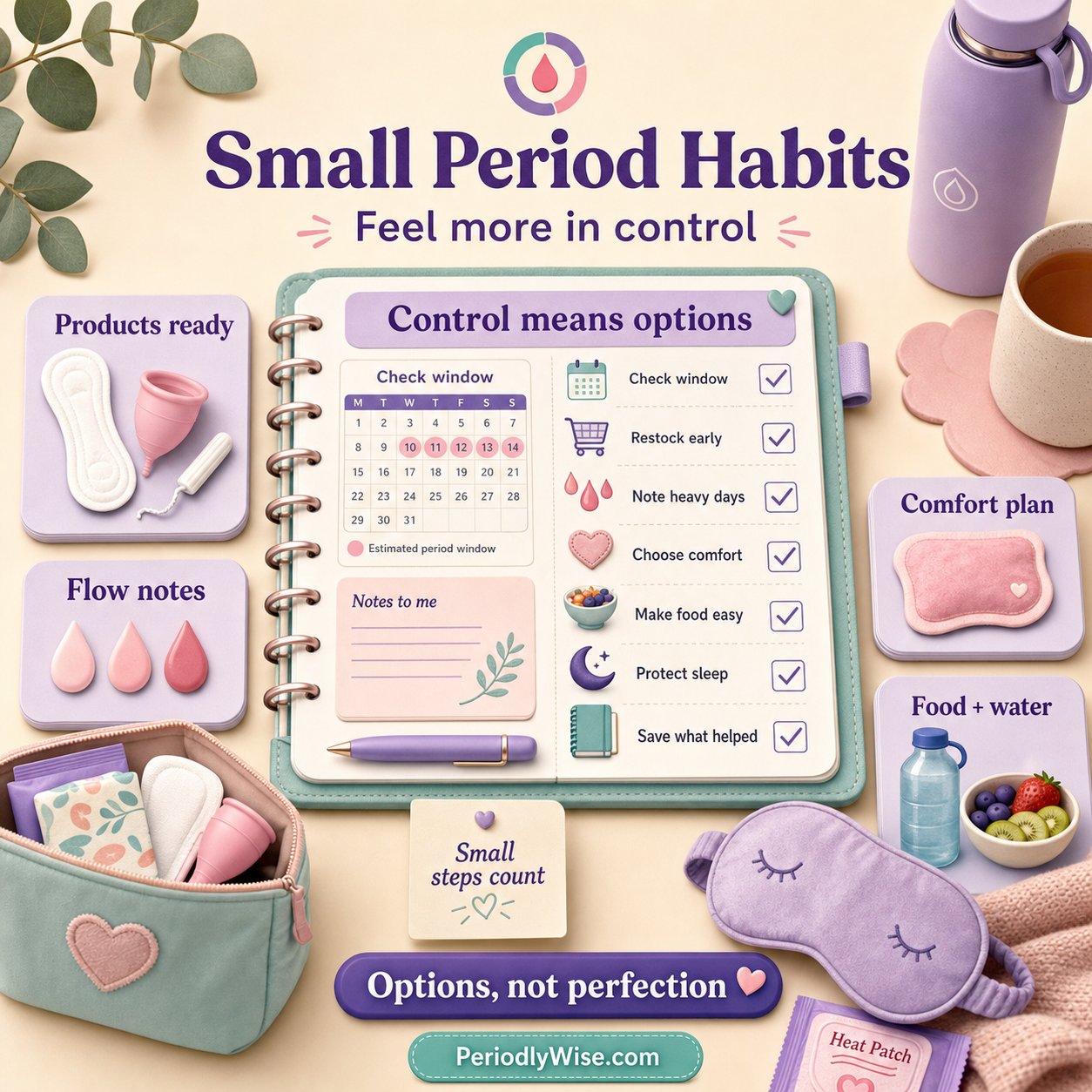
Control means options, not perfection
Many people hear "feel more in control" and imagine a strict routine: perfect tracking, perfect meals, perfect sleep, perfect product changes, perfect mood. That kind of control usually breaks quickly because menstrual cycles are not exact and daily life is not exact either.
A more realistic version is option-based control. If your period starts early, you have a product. If cramps appear, you know your first comfort step. If flow is heavier, you have backup. If appetite is low, you have a gentle food idea. If emotions feel sensitive, you have language for the pattern. If symptoms are stronger than usual, you know what to track and when to seek help.
This approach keeps dignity at the center. You are not trying to defeat your period. You are making the day easier to live inside.
Seven small habits that can change the whole period experience
These habits are deliberately small. You can use all of them, some of them, or only the ones that match your life. Small is the point. A habit that survives real life is more useful than a perfect plan you cannot keep.
1. Check your period window before the week begins
Once or twice a week, glance at your estimated period window in PeriodlyWise. This does not need to become repeated checking. One calm review can help you decide whether to carry products, plan laundry, avoid overbooking, or prepare for heavier days.
If date uncertainty makes you anxious, remember that estimates are not promises. Cycles can vary from month to month. For more context, read Why Period Dates Change From Month to Month.
2. Restock before you are completely out
Running out of products can make a normal period feel stressful. A simple habit is to restock when you reach the last few pads, tampons, liners, cup wipes, pain-support items, or preferred backup products. Keep products in more than one place if your life includes work, school, travel, caregiving, or long days outside home.
This is the heart of a period care kit: not a fancy kit, just a useful one. Your kit can be small, private, and practical.
3. Note your heavy days without fear
Flow awareness helps you plan product type, absorbency, wear time, clothing, bathroom timing, sleep setup, and backup protection. Track whether day 1, day 2, overnight, or morning after standing tends to be heaviest.
The NHS notes that heavy periods can include needing to change products every 1 to 2 hours, using two types of products together, bleeding through clothes or bedding, passing large clots, avoiding activities, or feeling tired or short of breath. If heavy bleeding affects your life, medical advice can help.
4. Choose one first comfort step
When cramps, back pain, headache, nausea, or bloating starts, decision fatigue can make everything harder. Choose one first step ahead of time. It might be heat, water, gentle movement, rest, a warm shower, pain relief if it is safe for you, food, or quiet.
The NHS lists heat, gentle exercise, massage, and painkillers such as paracetamol or ibuprofen as options that may help period pain for some people. What matters is choosing what is appropriate for your body and seeking care if pain is severe, worsening, or disrupting daily life.
5. Make food easier, not perfect
Some period days come with low appetite, nausea, bloating, cravings, or fatigue. A helpful habit is to keep a few "easy yes" options available: warm drinks, soup, toast, rice, yogurt, fruit, crackers, eggs, smoothies, or whatever is culturally familiar and gentle for you.
You do not have to force a perfect nutrition plan on a hard period day. If appetite changes are common for you, read Low Appetite During Your Period for a calmer way to track food, fluids, nausea, pain, and energy.
6. Protect one sleep choice
Sleep can affect how period symptoms feel the next day, and period symptoms can affect sleep. Choose one sleep-supporting habit that is realistic: preparing products before bed, using the bathroom before sleep, keeping water nearby, reducing late-night scrolling, choosing comfortable clothing, or writing down worries so they do not circle all night.
If leaks are the reason you sleep lightly, read Period Leaks at Night. If worry gets stronger near bedtime, Period Anxiety at Night may help you track the pattern.
7. Save what helped while it is fresh
The best period advice is often your own past experience. When something helps, save it. "Heat before leaving helped." "Changed product earlier, less leak worry." "Soup was easier than a full meal." "Quiet evening helped mood." "Called a friend, felt grounded." These notes turn care into memory.
Over a few cycles, PeriodlyWise can become a place where your body history supports your future plans. That is how small habits become self-trust.
What to track when you want more control
Track the details that help you make decisions. You do not need to track everything forever.
| Decision you want to make | Track this | Why it helps |
|---|---|---|
| When should I carry products? | Period start dates, cycle length, spotting, and expected period window | Reduces surprise and supports daily planning. |
| Which product should I use? | Flow level, product type, wear time, leaks, skin comfort, and clots | Helps match absorbency and comfort to real flow. |
| How should I plan day 1 or day 2? | Pain, flow, energy, sleep, appetite, bathroom access, and schedule impact | Shows which days need more flexibility. |
| What should I prepare at night? | Overnight flow, leak location, sleep position, cramps, wake-ups, and product fit | Supports better sleep and less morning stress. |
| When should I ask for help? | Severity, sudden changes, daily-life disruption, dizziness, shortness of breath, unsafe mood, or very heavy bleeding | Gives clearer information for medical support. |
Tiny scripts that help you stay steady
Sometimes control is not about supplies. It is about having words ready. Short scripts can protect your privacy and reduce emotional pressure.
- For yourself: "This is normal body care. I only need the next step."
- For a schedule change: "I need to adjust the timing for a health reason."
- For a bathroom break: "I need a quick break. I will be back soon."
- For support: "My period is heavy today. Can you help me with one thing?"
- For a hard mood day: "This feeling is real, and I can respond gently before I decide what it means."
If you want more preparation for public, work, school, travel, or social days, read Period Confidence: Small Ways to Feel Prepared Anywhere.
A simple period control rhythm
You can organize these habits into a rhythm that repeats without much effort.
- Before the period window: check dates once, restock products, and avoid overpacking the schedule if possible.
- When bleeding starts: log the start date, choose product support, and note the strongest symptom.
- During heavier days: track flow, product changes, leaks, clots, pain, energy, and what helped.
- Before sleep: prepare products, water, comfort items, and a realistic morning plan.
- After the period: review one pattern and one thing to prepare for next time.
This rhythm keeps period care light but useful. It also leaves room for life. You are not building a rigid routine. You are building a small support system.
When small habits are not enough
Small habits can make normal period care easier, but they should not be used to dismiss severe symptoms. Speak with a healthcare professional if period pain is severe, worsening, stops you from usual activities, or comes with pain during sex, pain when peeing or pooing, bleeding between periods, a swollen tummy, loss of appetite, or unexplained weight loss.
Also seek advice if heavy bleeding affects your life, you need to change products very frequently, you bleed through clothes or bedding, pass large clots, feel tired or short of breath a lot, or have sudden changes in your normal pattern. If mood symptoms are severe, frightening, unsafe, or interfere with relationships, work, school, sleep, or eating, get support rather than trying to track your way through it alone.
FAQ
What is the easiest period habit to start with?
Start by logging the first day of bleeding and checking your next period window once a week. This gives practical planning value without requiring detailed tracking.
How can I feel more prepared if my period is irregular?
Use a wider period window, keep products in more than one place, and track actual start dates over time. If irregularity is new, persistent, or worrying, seek medical advice.
Do I need a period care kit?
You do not need a formal kit, but keeping products, cleanup items, water, a snack, comfort support, and backup underwear in useful places can reduce stress.
Can small habits help with period anxiety?
They can help reduce practical uncertainty, which may lower some worry. If anxiety is intense, persistent, unsafe, or hard to interrupt, professional support is important.
Should I track every symptom?
No. Track what helps you make decisions: dates, flow, pain, energy, mood, sleep, appetite, daily impact, and what helped. If tracking becomes stressful, reduce the detail.
Use PeriodlyWise to estimate your period window, save useful notes, and turn repeated period surprises into calmer options.
Open the Period Tracker