A calm morning routine is not a performance. It is not a checklist designed for a person who slept perfectly, woke up with steady energy, had no pain, no stress, no caregiving, no commute, no period window, and no real life waiting outside the bedroom door.
A body-respecting morning is quieter than that. It starts by asking, "What is true for my body today?" Maybe you feel clear and ready. Maybe you feel slow. Maybe your period is due soon. Maybe your sleep was broken, your appetite is low, your cramps are beginning, or your mind needs a gentler first step. The routine should meet that truth instead of arguing with it.
PeriodlyWise stands for this kind of self-care: practical, kind, and realistic. Your body is not something to fight every morning. It is something to listen to, support, and move with.
Why mornings can set the emotional tone
The first hour of the day often decides how much friction you carry. If you begin by rushing, ignoring pain, skipping food when you need it, or pretending your energy is higher than it is, the rest of the day can feel like catching up with yourself. A calmer start does not fix everything, but it can reduce the feeling that you are already behind.
This matters because the body does not wake up the same way every day. The Office on Women's Health notes that hormonal changes across the menstrual cycle can affect emotional, mental, and physical health. Some people notice changes in energy, memory, pain, sleep, appetite, mood, or symptoms of existing conditions at different cycle points. Stress, poor sleep, illness, work pressure, and life responsibilities also shape how a morning feels.
A respectful routine gives you a way to respond to that changing context without turning every morning into a medical investigation. You are not diagnosing yourself over breakfast. You are noticing enough to start wisely.
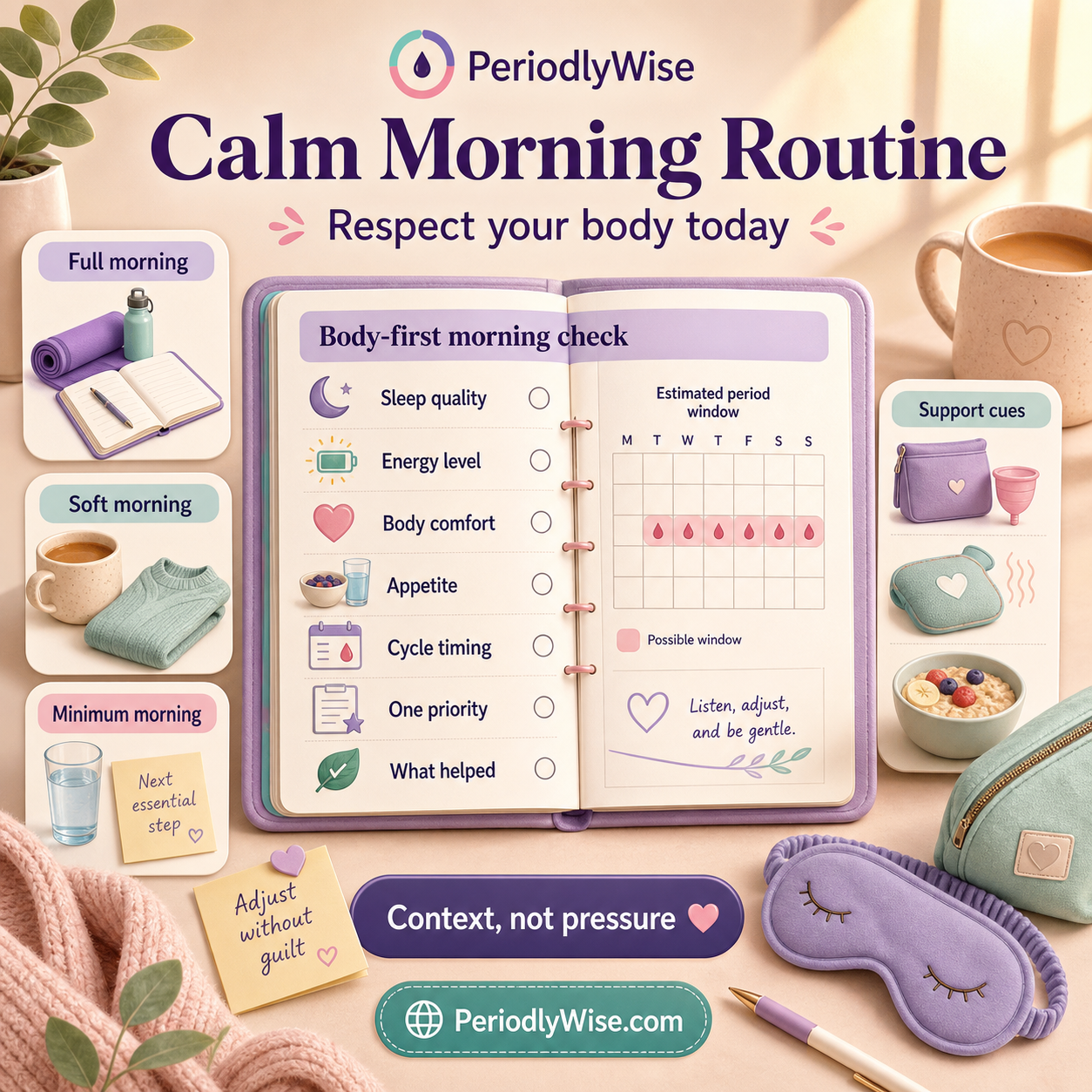
The body-first morning check
Before you reach for the day, take thirty seconds to name what is already present. This is not a dramatic ritual. It can happen while sitting up, washing your face, making tea, or opening PeriodlyWise.
| Morning cue | What it may tell you | Gentle response |
|---|---|---|
| Sleep quality | Poor sleep can make mood, pain, focus, and hunger feel harder. | Choose a slower first task, add light, hydrate, and reduce avoidable rush. |
| Energy level | Low energy may come from sleep, stress, heavy flow, illness, food, or cycle timing. | Pick one priority and delay nonessential decisions when possible. |
| Body comfort | Cramps, back pain, headache, bloating, or nausea may need support early. | Use heat, water, gentle movement, rest, or medication if it is safe for you. |
| Appetite and digestion | Food may feel easy, absent, or sensitive depending on sleep, stress, nausea, or cycle phase. | Choose simple food or warm fluids instead of forcing a perfect breakfast. |
| Cycle timing | Your period window, PMS timing, spotting, or period day can change practical needs. | Pack products, choose comfortable clothing, and note what your body needs. |
A flexible five-part routine
A routine that respects your body should be small enough to survive a difficult morning. Think of it as five parts you can stretch or shrink.
1. Arrive before accelerating
Give your body one minute before the day becomes loud. Sit up slowly. Open the curtains. Put your feet on the floor. Take a few steady breaths. If stress is high, the NHS describes simple breathing exercises as one possible way to settle the body. You do not have to make it spiritual or complicated. You are just letting the nervous system realize the day has started.
2. Choose one honest priority
Instead of asking, "How do I do everything?", ask, "What is the first honest priority?" On a high-energy morning, that might be exercise, focused work, school prep, or a full routine. On a lower morning, it may be shower, breakfast, medication, packing period supplies, or sending one message. Honest priorities protect you from overpromising before you understand your capacity.
3. Feed the morning gently
Food does not need to be perfect to be supportive. If appetite is normal, eat what helps you feel steady. If appetite is low, try a smaller option: toast, fruit, yogurt, porridge, soup, crackers, eggs, a smoothie, warm tea, or whatever is familiar and manageable for you. If nausea, cramps, or low appetite repeat around your period, note the timing rather than blaming yourself.
4. Dress for the real day
Clothing can either support the body or argue with it. A body-respecting routine makes room for waist comfort, breathable fabric, layers, leak confidence, shoes that match energy, and products that fit the day. Choosing comfort is not giving up. It is making the day easier to inhabit.
5. Leave a note for future you
If the morning teaches you something, save one line. "Slept poorly, needed slower first task." "Period due in two days, packed products, felt calmer." "Day 1 cramps, heat before work helped." These notes become a personal care map over time.
How cycle awareness fits without taking over
Cycle awareness can support a morning routine without making the whole morning about your period. A quick check of your estimated period window can help you pack supplies, choose clothing, plan bathroom access, prepare pain support, or decide whether to keep the first task lighter.
This is especially useful if your mornings change before or during your period. You may notice slower energy, more sensitivity, lower appetite, heavier flow, cramps, poor sleep, or a stronger need for quiet. If that sounds familiar, read When Your Body Needs Slower Mornings During Your Period. If you want the broader pattern view, How Cycle Awareness Can Make Daily Life Feel Less Random connects timing with daily life.
The key is to keep tracking light. PeriodlyWise can hold the pattern so you do not have to mentally carry it all morning. For a calmer relationship with tracking, read Learning Your Cycle Without Obsessing Over It.
Three versions for different body days
A respectful routine has versions. You do not need the same morning every day.
| Morning version | Use it when | What it can include |
|---|---|---|
| Full morning | You slept reasonably well and have steady energy. | Movement, breakfast, planning, shower, focused first task, and a quick PeriodlyWise check if useful. |
| Soft morning | You feel slow, sensitive, pre-period, on your period, bloated, or low on bandwidth. | Warm drink, simple food, comfortable clothes, one priority, products packed, and fewer early decisions. |
| Minimum morning | You are in pain, exhausted, overwhelmed, sick, or short on time. | Bathroom, water, essential medication if prescribed or safe, period supplies if needed, one message, and the safest next step. |
The minimum version is not failure. It is the routine doing its job under pressure.
When planning becomes pressure
A morning routine should create support, not a new way to judge yourself. If the routine makes you feel guilty, simplify it. If tracking makes you anxious, reduce the detail. If productivity advice makes you ignore pain, step away from that advice. The NHS mental wellbeing guidance emphasizes practical steps such as connecting with others, being active in ways that suit you, learning, giving, and paying attention to the present. None of that requires a perfect start.
A helpful question is: "Does this routine make my body feel safer, steadier, or more prepared?" If the answer is no, change the routine. Your morning should serve you.
What to track in PeriodlyWise
If you want your morning routine to become more personal over time, track only the details that change care decisions.
- Sleep: bedtime, wake-ups, sleep quality, and morning energy.
- Cycle timing: expected period window, PMS timing, spotting, period start, or period day.
- Body comfort: cramps, headache, back pain, bloating, nausea, digestion, skin comfort, or dizziness.
- Flow and products: flow level, product type, leaks, clots, pad irritation, or backup supplies.
- Morning support: food, fluids, heat, movement, quiet, clothing, medication if safe, or schedule changes.
- What helped: one thing worth repeating next time.
For more small habits that create options, read Small Period Habits That Make You Feel More in Control. For a self-care framing, read When Period Tracking Feels Like Self-Care.
When a hard morning needs more support
Some mornings are hard because life is hard. Some are hard because symptoms deserve attention. Seek medical advice if fatigue is severe or persistent, if you feel faint, dizzy, or short of breath, if pain is severe or suddenly worse, if bleeding is very heavy, if symptoms are new or worrying, or if daily life is repeatedly disrupted.
Also seek mental health support if low mood, anxiety, panic, body distress, or emotional symptoms feel unsafe, intense, persistent, or hard to manage. A calmer routine can support you, but it should not be used to avoid needed care.
FAQ
What is a body-respecting morning routine?
It is a flexible routine that starts with your real body state: sleep, energy, mood, pain, appetite, cycle timing, and responsibilities. It adjusts instead of forcing the same pace every day.
How long should a calm morning routine take?
It can take five minutes or an hour. The length matters less than whether it helps you feel steadier, prepared, and less rushed.
Can cycle tracking help my morning routine?
Yes. Tracking can show whether certain mornings repeat around your period window, PMS timing, heavy flow, poor sleep, cramps, or appetite changes.
What if I cannot keep a routine?
Use versions: full, soft, and minimum. A routine that can shrink on hard days is more useful than one that collapses when life is busy.
When should I get medical advice?
Seek advice for severe or persistent fatigue, dizziness, faintness, shortness of breath, severe pain, very heavy bleeding, sudden changes, or emotional symptoms that feel unsafe or disruptive.
Use PeriodlyWise to notice cycle timing, morning energy, body comfort, and what helps you begin the day with more kindness.
Open the Period Tracker