Feeling at home in your body does not always arrive as confidence. Sometimes it arrives as a softer waistband. A slower breath. A meal that feels possible. A shower after a difficult day. A period product that fits better. A note that says, "This feeling has shown up before, and I know how to support myself."
There are days when the body feels familiar and days when it feels distant. Hormonal shifts, stress, sleep loss, pain, bloating, digestion changes, body image pressure, heavy flow, low appetite, anxiety, and ordinary life can all make a person feel less connected to themselves. That experience deserves gentleness, not shame.
PeriodlyWise believes body awareness should help you feel more respected, not more judged. Your body is not a project to fix before you are allowed to live in it. It is already your home, even on days when you need to find your way back room by room.
Home does not mean perfect
Many people think feeling at home in the body means loving every part of it all the time. That is a heavy expectation. Home is not always perfect. A home can be messy, tired, changing, noisy, tender, or in need of repair, and still be worth caring for.
Your body can be bloated and still deserve comfort. It can bleed and still deserve dignity. It can be tired and still deserve patience. It can be anxious and still deserve safety. It can change from cycle to cycle and still be yours.
This distinction matters because forced positivity can feel false. Body respect is often more reachable than body love. Respect says, "I do not have to criticize this body to care for it." That is enough to begin.
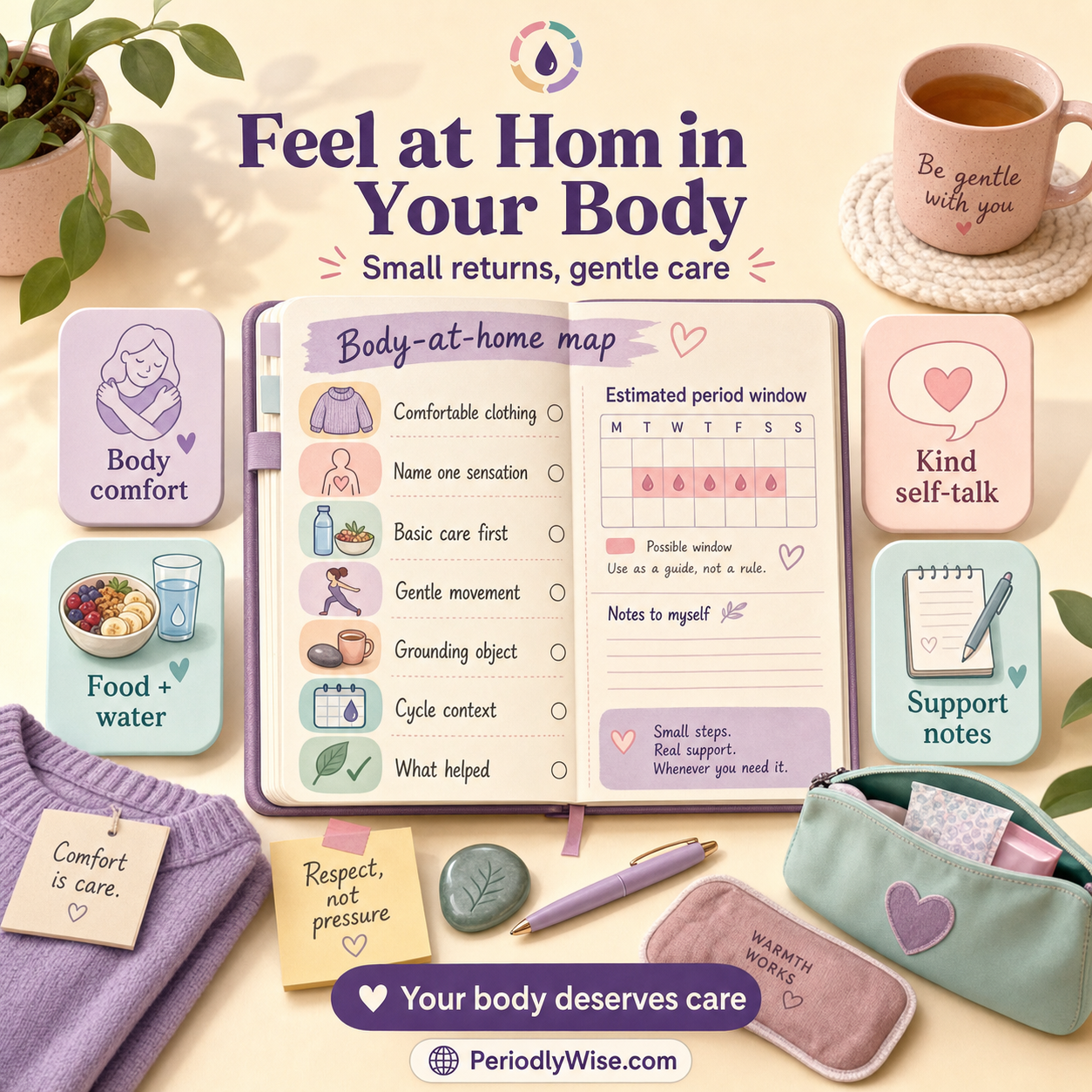
Six small ways back to your body
These are not rules. They are invitations. Choose the one that feels easiest today.
1. Change the texture around you
Texture can send a quiet safety signal. Soft clothes, clean underwear, breathable fabric, warm socks, a lighter bra, a looser waistband, fresh sheets, or a soft towel can help the body feel less like something to endure. If you are on your period, product fit and skin comfort matter too. Irritation, moisture, friction, scents, dyes, or adhesive can all make the body feel less comfortable to live in.
2. Name one sensation without a verdict
Try describing one body cue without judging it: "My shoulders are tight." "My stomach feels full." "My lower back aches." "My energy is low." "My chest feels tense." This is different from saying, "I am failing," "I look bad," or "I should not feel this." Neutral naming can create a little distance between sensation and self-criticism.
3. Offer basic care before analysis
Before trying to explain every feeling, try one basic care step. Water. Food. Bathroom. Warmth. Rest. Movement. A message to someone safe. A quiet pause. A period product change. A pain-support step that is safe for you. The body often needs care before it needs a conclusion.
4. Move for contact, not correction
Movement does not have to be a punishment or a body-shaping project. Gentle stretching, walking, shoulder rolls, slow dancing, a few minutes outside, or lying with feet supported can help you feel present in the body. If you are in pain, dizzy, very fatigued, bleeding heavily, or unwell, rest may be the more respectful choice.
5. Use one grounding object
A warm mug, water bottle, soft scarf, notebook, heating pad, lip balm, smooth stone, prayer item, scent you tolerate well, or comfortable pouch can be a small reminder: "I am here." Grounding does not have to look impressive. It only has to bring you back a little.
6. Save your kindest evidence
When something helps, write it down. "Fresh clothes helped." "Warm food helped." "Tracked cramps and felt less confused." "Rested without explaining." "Told a friend and felt safer." These notes become evidence that you can support your body even when you do not feel fully connected to it.
Where cycle awareness can help
Cycle awareness can be a powerful context tool when body connection changes around your period. The Office on Women's Health notes that cycle hormones can affect emotional, mental, and physical health. PMS can include symptoms such as irritability, anxiety, tiredness, sleep changes, appetite changes, bloating, headache, digestive changes, and trouble concentrating.
That information should be used gently. It does not mean every feeling is hormonal. It does not mean your reactions are not real. It means timing can be one piece of context. If you often feel unlike yourself before bleeding, read Not Feeling Like Yourself Before Your Period. If the disconnection is more body-focused, read Feeling Disconnected From Your Body.
PeriodlyWise can help you track body comfort, mood, sleep, appetite, pain, flow, and what grounded you. Over time, you may notice that certain kinds of care help at certain points in your cycle. That can turn a confusing day into a day with a map.
A body-at-home tracking map
If you want to track this without overthinking, use four simple prompts.
| Prompt | Example note | Why it helps |
|---|---|---|
| What feels uncomfortable? | Bloating, tight clothes, cramps, sticky skin, low appetite, or heavy flow. | Names the real friction instead of turning it into self-blame. |
| What feels supportive? | Loose pants, warm drink, shower, product change, quiet room, or fresh sheets. | Builds a personal comfort list. |
| What is the cycle context? | Pre-period, day 1, heavy day, spotting, late period, or after poor sleep. | Adds timing without making timing the whole story. |
| What helped me return? | Rest, food, water, movement, safe support, breathing, tracking, or kindness. | Creates evidence for future care. |
When body awareness becomes too sharp
Body awareness should not feel like constant surveillance. If tracking every sensation makes you more anxious, reduce the detail. If mirrors, scales, food rules, symptom checking, or cycle notes make you feel trapped, step back and seek support if needed. Awareness is meant to help you inhabit your body, not inspect it harshly.
The NHS mental wellbeing guidance includes everyday actions such as connecting with people, being physically active in ways that suit you, learning, giving, and paying attention to the present moment. These are broad wellbeing supports, not quick cures. They work best when they are adapted to your body, culture, safety, disability, faith, schedule, and real-life capacity.
For a softer tracking approach, read Learning Your Cycle Without Obsessing Over It. For a caring framework, read When Period Tracking Feels Like Self-Care.
Tiny scripts for coming back to yourself
Sometimes the first step is not a habit. It is one sentence.
- When clothes feel wrong: "My body deserves clothes that support it today."
- When bloating shows up: "This is a body sensation, not a character flaw."
- When your period changes the day: "I can adjust the plan without shaming myself."
- When mood feels tender: "This feeling is real, and I can respond before I judge it."
- When you feel disconnected: "I can return through one small act of care."
If heavy flow carries an emotional load for you, The Emotional Side of Heavy Flow may help you name that experience without shame.
What PeriodlyWise can hold for you
You do not have to keep every pattern in your head. PeriodlyWise can hold the practical pieces: period window, start dates, flow, pain, sleep, mood, appetite, body comfort, product fit, daily impact, and what helped. When those details are saved, you can stop treating each hard day as if it came from nowhere.
A useful note might be: "Pre-period, bloated, tight clothes made me irritable, loose clothes and walk helped." Another might be: "Day 2, heavy flow, felt disconnected, shower and clean products helped." Another might be: "Low mood, poor sleep, reached out to friend, felt safer." These notes are not about fixing yourself. They are about remembering your care language.
Feeling more at home in the body is rarely one big decision. It is a series of small returns.
When to seek extra support
Seek medical advice if body discomfort comes with severe pain, very heavy bleeding, dizziness, fainting, shortness of breath, fever, sudden changes, unexplained weight changes, bleeding between periods, missed periods with possible pregnancy, or symptoms that worry you. Seek mental health or eating-disorder-informed support if body distress, food restriction, compulsive checking, low mood, anxiety, panic, dissociation, or self-harm thoughts are present or feel unsafe.
Asking for help is not overreacting. It is one way to make the body safer to live in.
FAQ
What does it mean to feel at home in your body?
It means feeling more able to live in your body with respect, comfort, and trust. It does not require loving every sensation or appearance every day.
Can my cycle affect body connection?
Yes, for some people. Mood, sleep, appetite, bloating, pain, flow, and body comfort may shift around the menstrual cycle. Timing can be useful context, but it is not the only explanation.
What is one small thing I can do today?
Choose one supportive body action: drink water, eat something manageable, change into comfortable clothes, take a short walk, rest, shower, or save one note about what helped.
What if tracking makes me more anxious?
Track less. Save only the details that help you care for yourself, and seek support if checking feels hard to stop or increases distress.
When should I get help for body distress?
Get support if body distress affects eating, sleep, work, school, relationships, safety, or daily life, or if it comes with self-harm thoughts, panic, dissociation, or unsafe feelings.
Use PeriodlyWise to track body comfort, cycle context, and what helps you feel grounded without turning your body into a problem.
Open the Period Tracker