Having no period on birth control can feel either convenient or unsettling. It may be the result you wanted, or it may make you wonder whether something is wrong or whether you could be pregnant.
For many hormonal methods, lighter bleeding or no bleeding can be a normal effect. Continuous active hormones can prevent withdrawal bleeding, and some methods thin the uterine lining so there is little to shed. But the answer changes if the method was missed, late, used inconsistently, recently started, recently stopped, or if pregnancy is possible.
This guide explains why bleeding can disappear on birth control, how to tell a method-related pattern from a pregnancy-test situation, and what to track.
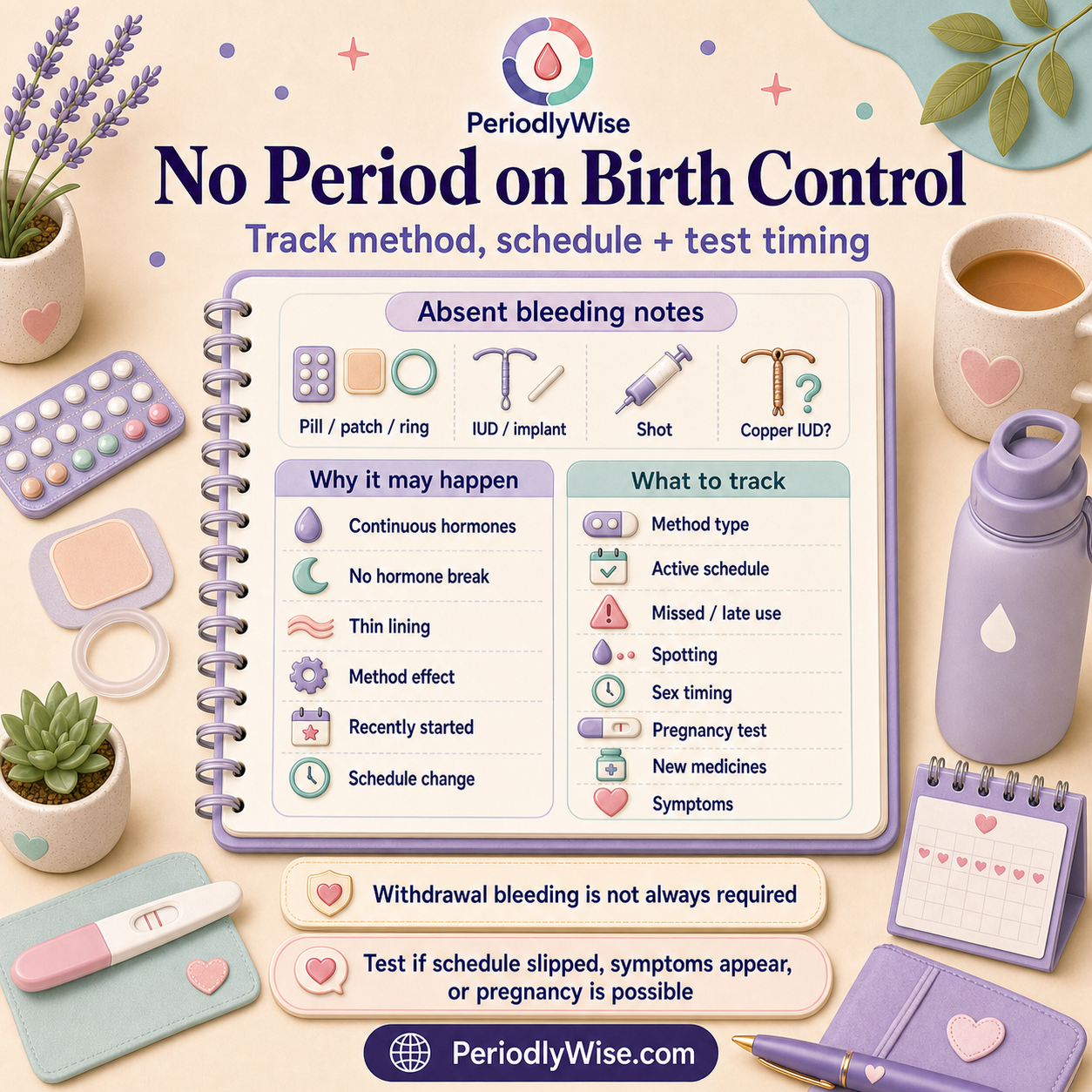
First: what kind of birth control are you using?
Hormonal birth control can change bleeding by stopping ovulation, keeping hormone levels steady, thickening cervical mucus, or thinning the uterine lining. With less lining building up, there may be little or nothing to bleed.
Mayo Clinic explains that withdrawal bleeding happens during a hormone-free interval and is the body's response to the hormone pause. If you use active hormones continuously, there may be no hormone-free interval and no withdrawal bleed.
This is different from a copper IUD or barrier method. A copper IUD does not use hormones to stop periods, so a missed period on a copper IUD should be interpreted with pregnancy testing and other causes in mind.
No period on birth control: method clues
| Method or pattern | No period can be expected? | What to check |
|---|---|---|
| Continuous pill, patch, or ring | Often yes, because there is no planned hormone-free break. | Missed doses, patch or ring timing, vomiting, diarrhea, medicines, and pregnancy-test timing. |
| Hormonal IUD or implant | Often lighter, irregular, or absent bleeding can happen. | New pain, pregnancy symptoms, string concerns, heavy bleeding, or infection signs. |
| Contraceptive shot | Often yes over time; NHS and Royal Women's Hospital note periods may stop. | Shot date, whether it was late, bone-health counseling, and troublesome bleeding. |
| Copper IUD or condoms only | No period is not caused by hormones from the method. | Pregnancy test, stress, illness, cycle changes, and urgent pain or bleeding symptoms. |
Withdrawal bleeding is not a health requirement
A monthly bleed on many pills, patches, and rings is withdrawal bleeding. It happens because hormones pause or drop, not because the body must have a natural period every month.
MyHealth Alberta explains that with hormonal birth control the uterine lining does not build up in the same way and it is safe not to have a period every month when this method is appropriate for you. Mayo Clinic similarly notes that regular monthly bleeding does not provide health benefits for people using hormonal birth control.
That reassurance does not mean every missed bleed should be ignored. The key question is whether the absent bleeding fits the method and schedule, or whether there was a missed dose, late injection, medication interaction, vomiting, diarrhea, or pregnancy symptom that changes the risk.
What to track
Birth-control bleeding records are clearest when method details and symptoms sit together.
- Method: pill, patch, ring, shot, implant, hormonal IUD, copper IUD, or barrier method.
- Schedule: active pills, placebo week, continuous use, ring change date, patch change date, or injection date.
- Missed or late use: missed pills, late shot, delayed patch, ring out time, or long hormone-free break.
- Bleeding: no bleeding, spotting, brown discharge, breakthrough bleeding, or heavy bleeding.
- Sex timing: whether pregnancy is possible and whether backup contraception was needed.
- Pregnancy tests: date, result, and whether testing was too early.
- Symptoms: nausea, breast tenderness, fatigue, cramps, pelvic pain, shoulder pain, dizziness, or fainting.
- New medicines or supplements: especially anything your clinician or pharmacist says may affect birth control.
- Vomiting or diarrhea: this can matter for pill absorption.
- Method changes: starting, stopping, switching, or removing a method.
What to do if your bleed does not come
Use the method instructions first, then add symptom and pregnancy context.
- Check your birth-control instructions. Follow the missed-dose or late-method directions for your exact method.
- Decide whether pregnancy is possible. If yes, take a home pregnancy test from the first day of a missed expected bleed or at least 21 days after unprotected sex if dates are unclear.
- Keep using contraception unless told otherwise. Stopping because of absent bleeding can raise pregnancy risk if you still need protection.
- Track spotting rather than forcing a period label. Breakthrough bleeding is common early with continuous use and often lessens over time.
- Call your clinician for mismatched patterns. New severe pain, heavy bleeding, positive test, or no bleeding that worries you deserves guidance.
When to test or seek care
Take a pregnancy test if you missed pills, started a pack late, had a late injection, had a long hormone-free break, had vomiting or diarrhea that could affect pills, used a new interacting medicine, or have pregnancy symptoms. NHS guidance says birth-control hormones do not stop pregnancy tests from working.
Seek urgent care if you may be pregnant and have severe one-sided pelvic pain, shoulder pain, fainting, severe dizziness, heavy bleeding, or symptoms that feel unsafe. Mayo Clinic notes that if pregnancy is suspected on the pill, a home test is a reasonable precaution.
Book a routine visit if the pattern does not fit your method. Also check in for heavy breakthrough bleeding, bleeding lasting more than seven days, pain, new discharge, or if no period continues after stopping birth control beyond the timeframe your clinician gave you.
Use PeriodlyWise to record method, schedule, missed doses, bleeding changes, symptoms, sex timing, and pregnancy-test dates.
Open the Period TrackerFAQ
Is no period on birth control normal?
It can be normal with hormonal birth control, especially continuous pills, patch, ring, hormonal IUDs, implants, and the shot. It depends on method and schedule.
Does no period mean the birth control is working?
Not by itself. No bleeding can be a method effect, but effectiveness depends on using the method correctly and on whether anything disrupted it.
Can I be pregnant and still have no period on birth control?
Yes, pregnancy is possible with any method. Test if the method was missed or late, if pregnancy symptoms appear, or if you are worried.
Is it unhealthy to skip periods on birth control?
For many people using hormonal methods appropriately, monthly withdrawal bleeding is not medically necessary. Ask your clinician if continuous use fits your health situation.
What if I have no period on a copper IUD?
Copper IUDs do not suppress periods with hormones. If a period is missing, use pregnancy-test timing and seek care for pain, heavy bleeding, or pregnancy warning symptoms.
Final thoughts
No period on hormonal birth control is often an expected effect, not a sign that blood is trapped or that the body needs a monthly cleanse.
The calm way to handle it is to connect the absent bleed to method type, schedule, missed-dose risk, symptoms, and pregnancy-test timing. If the pattern feels unsafe or does not match your method, ask for medical guidance.