A period that is suddenly lighter than usual can feel confusing. You may wonder whether it still counts as a real period, whether stress changed your cycle, or whether light bleeding could be connected to pregnancy. The honest answer is that one lighter period can happen, but it is worth comparing it with your own usual pattern.
Your period is not measured only by the number of pads, tampons, cups, or period underwear changes. Timing, number of bleeding days, color, spotting, cramps, contraception, illness, pregnancy possibility, and whether the pattern repeats all matter. A light day at the beginning or end of a period is different from a whole cycle that turns into two days of spotting.
PeriodlyWise can help you turn the worry into a record. Save the start date, flow level, end date, symptoms, pregnancy-test timing if relevant, and anything new in your life that cycle. A clear record makes it easier to tell a random light month from a pattern that deserves care.
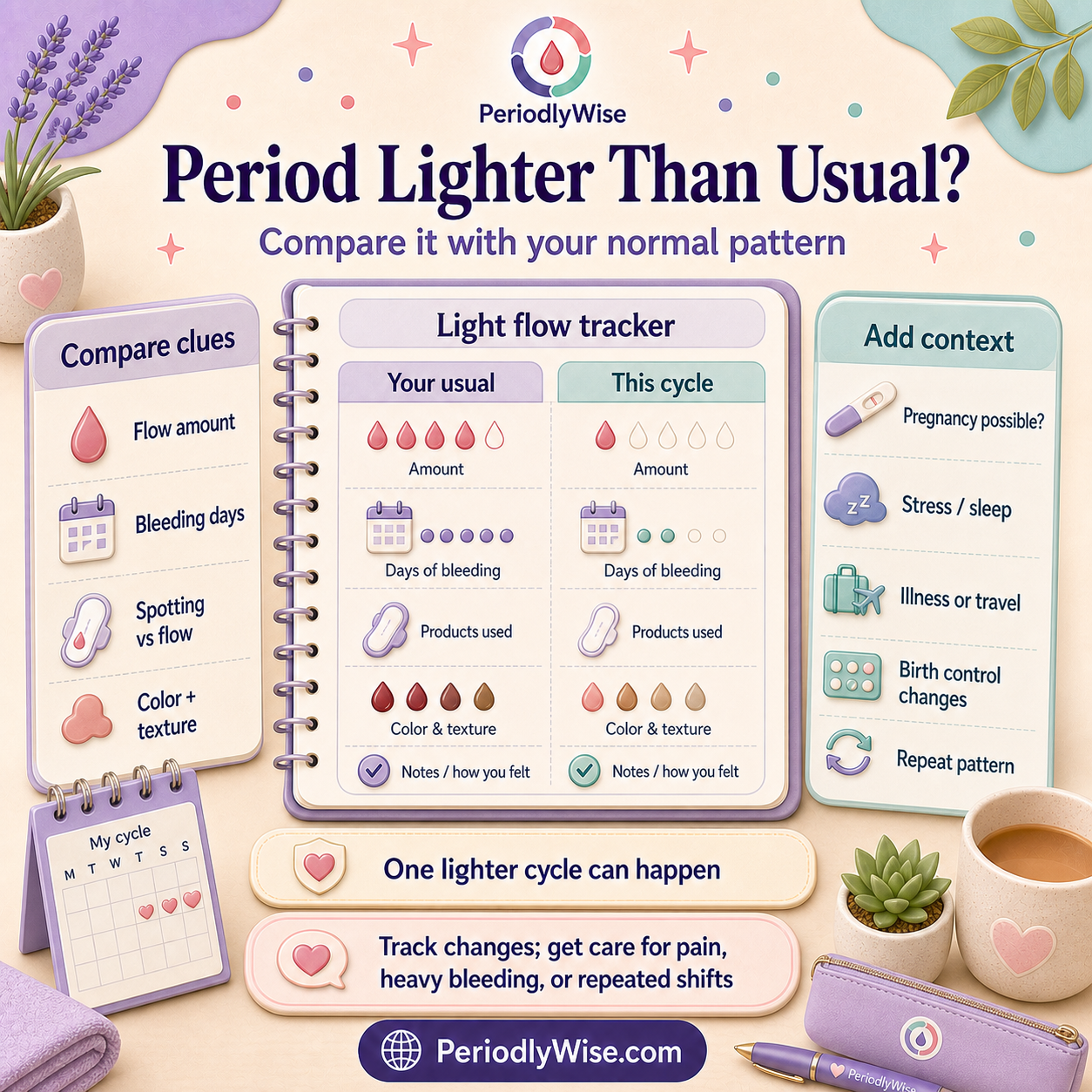
The pattern matters more than one isolated light day.
What counts as a lighter period?
A lighter period usually means you bleed less than you normally do, bleed for fewer days, need fewer period products, or see mostly spotting instead of your usual flow. Mayo Clinic notes that within a broad range, what is typical depends on what is typical for you. That personal baseline matters more than comparing yourself with someone else's period.
The Office on Women's Health recommends tracking how heavy bleeding is, whether it is heavier or lighter than usual, how many pads or tampons you use, how many days bleeding lasts, and whether symptoms cause you to miss normal activities. Those simple details are enough to make the next conversation with yourself or a clinician more accurate.
Do not force every trace of blood into the same label. Brown spotting before a period, withdrawal bleeding on hormonal birth control, ovulation spotting, and a true light period can look similar in a calendar if you only mark them as period. Use separate notes for spotting, full flow, and unusual bleeding.
Lighter flow clues to compare
| What changed | Often less concerning when | Worth checking when |
|---|---|---|
| Amount | One cycle is lighter but still has your usual timing and symptoms. | Bleeding is only spotting, repeats, or follows possible pregnancy. |
| Length | Your period is a day shorter but otherwise familiar. | Bleeding lasts only 1 to 2 days when that is new for you. |
| Timing | It starts near the expected date. | It arrives very early, very late, or between periods. |
| Symptoms | Cramps and PMS feel similar to your usual pattern. | Pain is severe, one-sided, new, or paired with fever or unusual discharge. |
| Pattern | The next cycle returns to normal. | Several cycles become lighter, irregular, or absent. |
Common reasons a period may be lighter
A lighter period can happen after a delayed or different ovulation pattern. When ovulation timing changes, the hormone pattern that prepares and sheds the uterine lining can change too. Stress, poor sleep, travel, illness, changes in food intake, weight change, and intense exercise can all affect the cycle for some people.
Hormonal birth control is another common reason. Combined pills, patches, rings, hormonal IUDs, implants, injections, and continuous-use schedules can make bleeding lighter, shorter, irregular, or absent. If you recently started, stopped, missed, or changed a method, treat that as important context.
Life stage can matter too. Periods often change over time. The Office on Women's Health notes that periods may get lighter in the 20s and 30s, while the transition toward menopause can bring cycles that are shorter, longer, lighter, heavier, skipped, or irregular. Postpartum and breastfeeding hormones can also make bleeding patterns unpredictable.
Health conditions can also be part of the picture. Thyroid disease can make periods very light, heavy, irregular, or absent. PCOS, eating disorders, high prolactin, primary ovarian insufficiency, uncontrolled diabetes, pelvic infection, and other conditions can affect bleeding or cycle timing. A lighter period does not diagnose any of these, but repeated change is useful information.
Sort the pattern before you name the cause
A lighter period can feel urgent because it is a change, but the safest next step depends on how the change differs from your usual cycle. This comparison is not a diagnosis. It is a way to decide what needs a note, a pregnancy test, a routine appointment, or urgent care.
| If this is the pattern | Useful next step | Do not overlook |
|---|---|---|
| One familiar but lighter period | Track flow, timing, symptoms, and the next cycle. | Take a pregnancy test if pregnancy is possible. |
| Mostly brown or pink spotting | Mark spotting separately from full flow. | A positive test, worsening pain, or persistent spotting needs care. |
| Lighter bleeding after starting or changing hormones | Record the method and every start, stop, missed-dose, or removal date. | Birth control does not automatically rule out pregnancy. |
| Periods becoming light or absent over several cycles | Arrange routine medical advice and bring a clear timeline. | Life stage, nutrition, endocrine changes, and other health factors can matter. |
| Light bleeding with severe or one-sided pain | Seek urgent medical assessment, especially if pregnancy is possible. | Do not wait for another cycle if you feel faint, unsafe, or very unwell. |
A pregnancy-aware way to handle a very light bleed
A very light bleed cannot confirm or rule out pregnancy. If pregnancy is possible and the bleeding is much lighter, shorter, or different from your usual period, keep the description neutral in your tracker: note the first spotting, the first true flow, the expected period date, sex and contraception context, and every test date and result.
A home pregnancy test is generally most useful after a missed period. When cycles are irregular or dates are unclear, a longer timeline from sex can help avoid testing too early. A positive test with pain, one-sided pain, shoulder-tip pain, dizziness, fainting, or heavy bleeding needs urgent medical care. PeriodlyWise can organize dates, but it cannot tell what a bleed means in pregnancy.
What to track this cycle
Use a small, specific record instead of trying to remember everything later.
- Bleeding start and end: mark the first day of true flow separately from spotting.
- Flow amount: light, medium, heavy, product changes, cup volume if you use one, and leaks.
- Color and texture: bright red, pink, brown, watery, clotty, or mostly discharge.
- Cycle timing: expected date, actual date, cycle length, and whether ovulation signs were late.
- Pregnancy context: sex timing, contraception problems, emergency contraception, and test dates.
- Life context: COVID or other illness, fever, travel, stress, sleep, food, exercise, weight change, new medicines, or birth control changes.
- Symptoms: cramps, one-sided pain, dizziness, fatigue, breast tenderness, nausea, fever, discharge, mood, or thyroid-like signs.
Four questions that make your notes useful
- Was it actual flow or spotting? Mark the first day that needed your usual period product separately from a few streaks or drops.
- Did the timing shift too? A light period near the expected date is a different pattern from light bleeding after a late period or between periods.
- What changed before this cycle? Note illness, sleep, stress, travel, food or exercise changes, hormones, and new medicines without assuming any one item is the answer.
- Did the next cycle settle? One unusual month gives context; a repeated pattern gives a clinician much more to work with.
What to do if this period is lighter than usual
A calm plan helps you avoid both panic and dismissal.
- Compare it with your baseline. Ask whether this is just a lighter version of your normal period or a completely different bleed.
- Decide whether pregnancy is possible. If yes, take a home pregnancy test after a missed period or use the irregular-cycle timing recommended by reliable health sources.
- Look for a recent trigger. Note illness, major stress, poor sleep, travel, contraception changes, weight change, or intense exercise.
- Track the next cycle. One lighter period may pass; repeated lighter, skipped, or irregular cycles deserve more attention.
- Get medical advice for red flags. Pain, bleeding between periods, positive pregnancy test, repeated changes, or periods stopping for months should not be handled by tracking alone.
When to test or seek care
Take a pregnancy test if pregnancy is possible and bleeding is much lighter than a normal period, if your period is late, or if you are unsure whether the bleeding counted as a period. The Office on Women's Health says irregular cycles can make test timing harder and suggests using a longer timeline from cycle start or sex when dates are unclear.
Speak with a clinician if lighter bleeding repeats for several cycles, your periods suddenly stop for more than 90 days and you are not pregnant, your cycles become newly irregular, or you have symptoms such as unexplained weight change, feeling very hot or cold, hair changes, acne, excess facial hair, pelvic pain, or unusual discharge.
Seek urgent care for a positive pregnancy test with severe pain or heavy bleeding, fainting, severe dizziness, shoulder-tip pain, fever with pelvic pain, or bleeding after menopause. Also get checked for bleeding between periods or after sex.
Use PeriodlyWise to save flow level, spotting, period length, symptoms, pregnancy-test timing, and cycle context in one place.
Open the Period TrackerFAQ
Can stress make my period lighter?
Yes, stress can affect cycle timing and hormones for some people. It may make bleeding arrive late, feel different, or become lighter for a cycle.
Can a light period mean pregnancy?
It can. Light bleeding is not a reliable way to rule pregnancy in or out. If pregnancy is possible, use a pregnancy test at the right time.
Does a lighter period mean something is wrong?
Not always. One lighter period can happen. A repeated or sudden pattern change is more important than one isolated month.
Can birth control make periods lighter?
Yes. Many hormonal methods can make bleeding lighter, shorter, irregular, or absent, especially with continuous use or progestin-based methods.
Should I count spotting as my period?
Only count it as your period if it becomes your usual full flow. Otherwise, mark it separately as spotting so your cycle record stays cleaner.
The bottom line
A lighter period is often a context question, not a single-symptom diagnosis. One light cycle may reflect normal variation, stress, illness, birth control, or a shifted ovulation pattern.
The safest approach is to compare it with your usual period, check pregnancy timing when relevant, track the next cycle, and ask for care if the pattern repeats or comes with concerning symptoms.