Your body will not feel the same every day. Some days you wake up clear, steady, social, focused, hungry, and ready. Other days you feel slower, more private, more sensitive, more tired, less hungry, more easily overstimulated, or more aware of every small discomfort.
That does not mean you are unreliable. It means you are alive in a body that changes. Sleep changes. Stress changes. Hormones change. Workload changes. Pain changes. Weather changes. Appetite changes. Periods arrive, flow shifts, cramps happen, and plans still expect you to behave like a perfectly even version of yourself.
Letting your body have different kinds of days is not giving up. It is building a more honest relationship with yourself. PeriodlyWise stands with everyone in this natural journey: no shame, no pressure to perform wellness, and no need to treat normal body changes as personal failure.
Why bodies do not feel the same every day
Many factors shape how a day feels. Sleep quality can affect attention, mood, reaction time, and energy. Stress can change appetite, tension, patience, and focus. The menstrual cycle can affect physical, mental, and emotional health. PMS can bring tiredness, sleep changes, mood changes, anxiety, appetite changes, bloating, headache, digestive symptoms, and trouble concentrating.
When those factors overlap, the same task can feel different from one day to the next. A meeting that was easy last week may feel draining today. A workout that felt good yesterday may feel wrong during cramps. A social plan may sound lovely in the morning and impossible by evening. These shifts are information, not proof that you are failing.
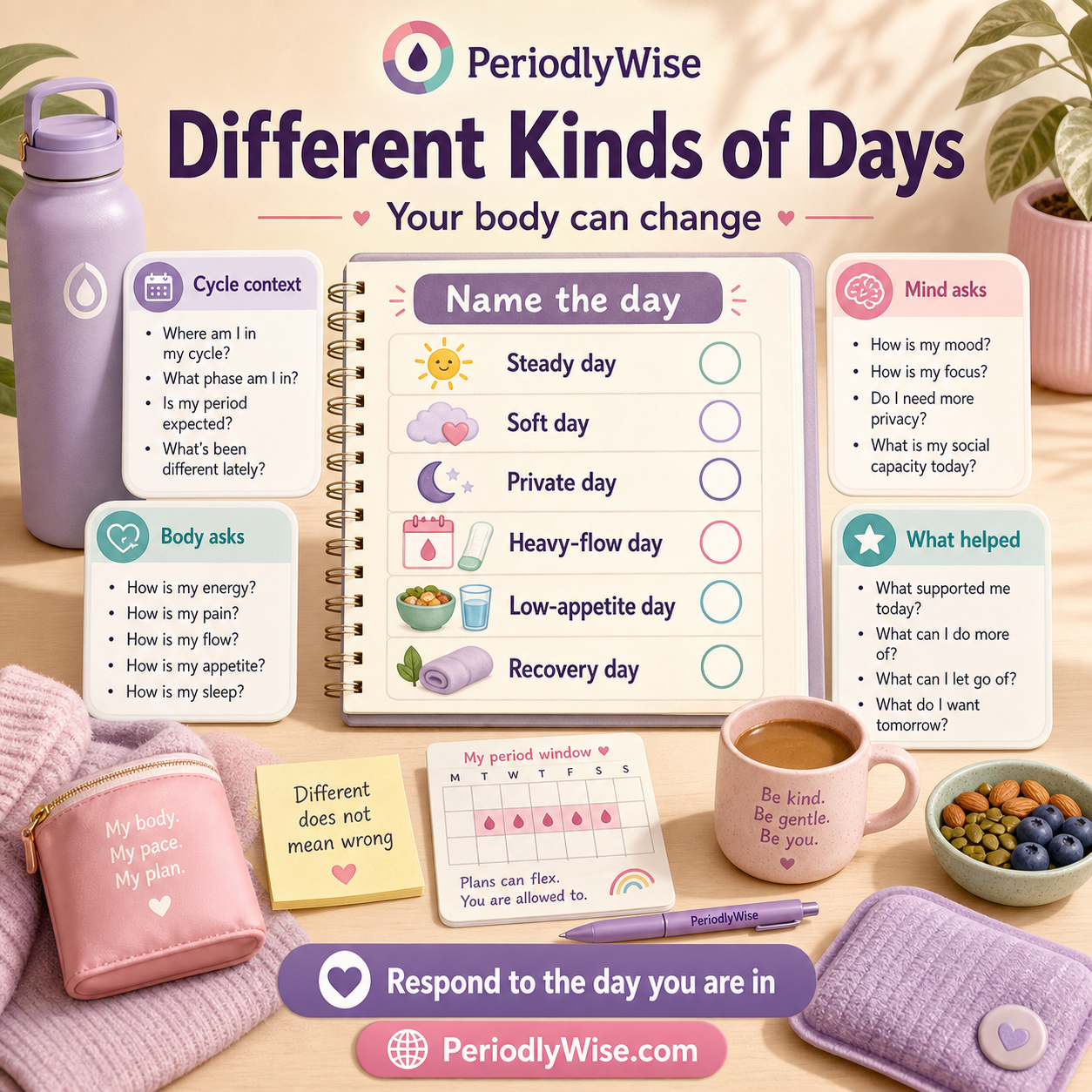
Name the kind of day
Naming the day can soften self-criticism. Instead of asking, "Why am I not normal today?", ask, "What kind of day is this?"
| Kind of day | What it may feel like | Care response |
|---|---|---|
| Steady day | Energy, focus, appetite, and mood feel workable. | Use the day for normal tasks, planning, movement, or connection. |
| Soft day | You need lower pressure, more rest, simpler food, and fewer decisions. | Reduce expectations, protect basics, and choose one realistic task. |
| Private day | You need less explaining, less social input, or more emotional space. | Use short boundaries, quiet time, and supportive contact only if it helps. |
| Heavy-flow day | Flow, product changes, leaks worry, fatigue, or bathroom planning take more attention. | Prepare products, backup, hydration, rest, and notes about what helped. |
| Low-appetite day | Food feels difficult because of nausea, cramps, stress, bloating, or fatigue. | Choose manageable foods and fluids without forcing perfection. |
| Recovery day | Your body asks for repair after poor sleep, stress, pain, illness, or overdoing it. | Lower stimulation, rest more, and avoid turning recovery into guilt. |
Cycle awareness without blame
Cycle awareness can make different kinds of days feel less random, but it should not become a new way to judge yourself. The point is not to blame every mood or body signal on hormones. The point is to add context.
If you often feel more sensitive before your period, that context can help you protect rest and reduce unnecessary conflict. If day 2 is often heavy, you can prepare products and plan a softer schedule. If sleep gets lighter before bleeding starts, you can adjust your evening earlier. For more on this style of awareness, read How Cycle Awareness Can Make Daily Life Feel Less Random and When Period Tracking Feels Like Self-Care.
Different days need different support
A common mistake is trying to use one routine for every body state. A routine that works on a steady day may collapse on a pain day. A plan that works after good sleep may feel impossible after a restless night. A meal plan that works with normal appetite may not fit a nauseous day.
Instead of one perfect routine, build flexible responses.
- For high-focus days: schedule demanding tasks, but do not spend all your future energy at once.
- For soft days: choose basic care, one priority, and one thing to postpone.
- For social days: enjoy connection, but notice when your battery is changing.
- For private days: use boundaries without overexplaining.
- For period days: plan products, pain support, food, fluids, rest, and bathroom access.
- For recovery days: let repair be the purpose.
If routines tend to fall apart when life is busy, read Building a Self-Care Routine That Actually Fits Real Life.
What to track in PeriodlyWise
Tracking different kinds of days does not mean tracking everything. It means saving the information that changes care.
| Question | What to note | How it helps |
|---|---|---|
| Where am I in my cycle? | Cycle day, period window, PMS timing, bleeding day, or spotting. | Adds context without assuming every change is hormonal. |
| What is my body asking for? | Energy, pain, cramps, flow, appetite, sleep, temperature, nausea, or comfort. | Shows whether the day needs rest, food, movement, products, or support. |
| What is my mind asking for? | Focus, overwhelm, anxiety, irritability, sensitivity, privacy, or social capacity. | Helps you adjust conversations, tasks, and stimulation. |
| What helped? | Heat, rest, water, food, quiet, movement, support, boundaries, early sleep, or product changes. | Builds a care pattern for future days. |
Permission to change the plan
Letting your body have different kinds of days means allowing the plan to respond to new information. That does not make you careless. It makes the plan more honest.
Try these small sentences:
- "Today needs a softer version."
- "I can do this, but at a slower pace."
- "My body is giving me context, not a character flaw."
- "I do not have to explain every detail to take care of myself."
- "Different does not mean wrong."
If you want more language for your needs, read The Quiet Confidence of Knowing Your Own Needs. If body trust feels difficult, read Little Ways to Feel More at Home in Your Body.
When patterns deserve care
Different kinds of days are normal, but patterns can also reveal when more support is needed. Seek medical advice if period pain is severe or worsening, bleeding is very heavy, fatigue is persistent, dizziness or breathlessness appears, symptoms are sudden or new, or daily life is repeatedly disrupted. Seek mental health support if low mood, anxiety, panic, dissociation, eating concerns, body distress, hopelessness, or thoughts of self-harm feel intense, persistent, unsafe, or hard to manage.
FAQ
Is it normal for my body to feel different every day?
Yes. Sleep, stress, food, movement, pain, cycle timing, workload, relationships, and health can all change how a day feels.
Does cycle awareness mean blaming everything on hormones?
No. Healthy cycle awareness adds context. It does not reduce your whole life or personality to hormones.
How can I support different kinds of days?
Name the day, choose the smallest useful support, adjust expectations, and note what helped so future planning becomes easier.
What if I feel guilty changing plans?
Use a simple reason and keep private details private. Adjusting a plan for your body is a valid form of care.
Use PeriodlyWise to notice different kinds of days, cycle timing, energy, comfort, mood, flow, rest, and what helps you respond with less shame.
Open the Period Tracker