PMS symptoms before a period do not arrive in one universal package. One cycle may bring breast tenderness and bloating. Another may feel more emotional: lower patience, tearfulness, anxiety, or a strong need for quiet. Some people notice almost nothing, while others can predict their period from a familiar cluster of body and mood changes.
The symptom itself matters, but the timeline matters just as much. A headache can happen at any point in the month. A headache that repeatedly appears several days before bleeding and settles after the period starts tells a more specific cycle story.
A PMS timeline, not a countdown clock
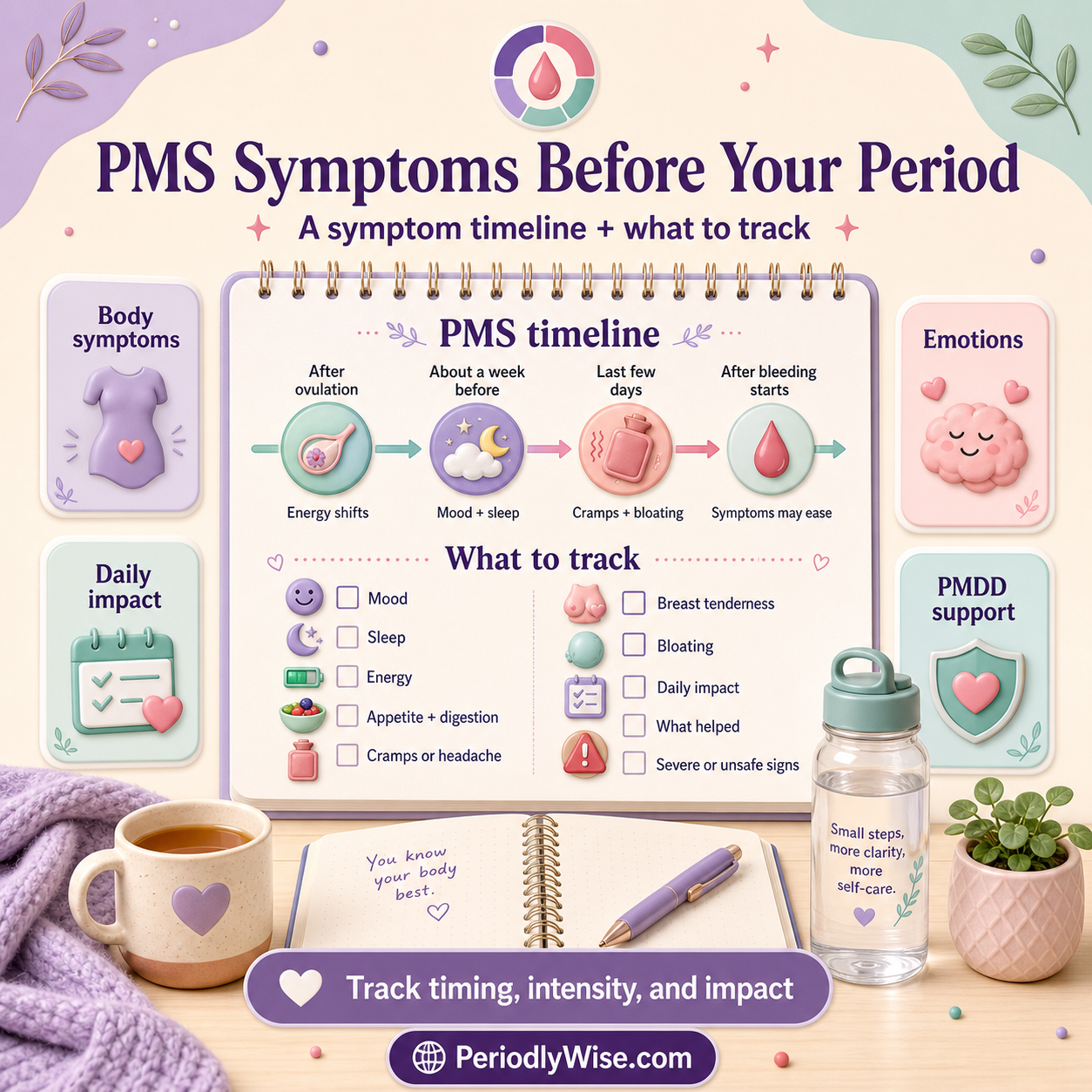
PMS generally happens after ovulation and before menstruation. The Office on Women's Health explains that symptoms may appear in the week or two before a period and tend to improve within a few days after bleeding starts. ACOG describes a clinically useful pattern as symptoms occurring during the five days before a period for at least three cycles, ending within four days after bleeding begins, and interfering with some normal activities.
These descriptions are guides, not a requirement to feel symptoms on an exact day. Your pattern may begin earlier or later, and individual symptoms may peak at different times.
You may first notice lower energy, breast fullness, cravings, bloating, or a change in emotional sensitivity.
For some people, irritability, anxiety, sadness, sleep changes, headaches, acne, appetite changes, or concentration difficulty become clearer.
Cramps, pelvic heaviness, backache, bowel changes, fatigue, and stronger mood shifts may join the pattern.
Premenstrual symptoms often start to settle within the first few period days. Flow and period pain may temporarily become the main symptoms.
The six symptom families worth noticing
1. Body discomfort
Bloating, breast tenderness, headache, backache, muscle or joint aches, swelling, acne, and cramps can all occur before a period. The symptoms can be mild and familiar, or they can be strong enough to affect clothing choices, movement, sleep, and concentration.
Track severity and function, not only presence. "Breasts tender" is useful; "breast tenderness woke me twice and made exercise uncomfortable" gives more context.
2. Mood and emotional changes
Irritability, sadness, crying spells, anxiety, tension, mood swings, social withdrawal, or feeling unlike yourself can be part of PMS. These feelings are real; cycle timing does not make them imaginary or unimportant.
At the same time, it is unhelpful to blame every difficult emotion on hormones. Notice whether the feeling appears in a repeatable premenstrual window, how intense it becomes, what is happening in your life, and whether it improves after the period begins. Read Not Feeling Like Yourself Before Your Period for a gentler emotional lens.
3. Concentration and memory changes
Some people describe slower recall, distractibility, indecision, or difficulty focusing before a period. Poor sleep, pain, stress, migraine, low mood, and appetite changes can add to that experience. If cognitive changes are new, severe, persistent, or present throughout the month, do not assume PMS is the only explanation.
4. Sleep and energy changes
PMS may involve fatigue, insomnia, restless sleep, sleeping more, or needing naps. A tired day may reflect several layers at once: cycle timing, poor sleep, stress, illness, nutrition, anemia, medication, or another condition. Pair energy notes with sleep and flow rather than recording fatigue alone.
For sleep-specific support, read Period Insomnia.
5. Appetite and digestive changes
Cravings, increased appetite, lower appetite, bloating, constipation, loose stools, and gas can happen in the premenstrual window. Record what changed without turning the note into food judgment. "Wanted salty food and felt bloated" is information, not a failure.
See Period Cravings and Appetite Changes for more detail.
6. Sensory and social bandwidth
Some people feel less tolerant of noise or light, more easily overwhelmed, or less interested in sex or social activity. These shifts may affect plans even when no single symptom feels dramatic. Tracking them can help you identify practical supports such as quieter evenings, fewer optional commitments, comfortable clothing, or an earlier wind-down.
PMS, pregnancy, PMDD, or something else?
Many PMS symptoms are nonspecific. Breast tenderness, fatigue, appetite change, mood change, bloating, cramps, and a late period can also happen in early pregnancy. If pregnancy is possible and the period is late or unusual, use an appropriately timed pregnancy test and seek medical guidance when needed. Symptoms alone cannot confirm or rule out pregnancy.
Depression, anxiety, migraine, IBS, thyroid disease, perimenopause, chronic fatigue, medication effects, and other conditions can overlap with or worsen before a period. Symptoms that occur all month but become worse premenstrually may represent premenstrual exacerbation of another condition rather than PMS alone.
PMDD is not simply a longer PMS symptom list. It involves severe premenstrual symptoms, especially mood symptoms, with meaningful disruption. Read PMS vs PMDD for a dedicated comparison.
A two-minute tracking plan
Use one short entry each evening for two or three cycles. The aim is to capture pattern and impact without turning the day into a medical questionnaire.
- Mark cycle context: expected period window, bleeding day, or days before the period.
- Choose the strongest symptoms: mood, sleep, energy, appetite, digestion, headache, breast tenderness, cramps, or another repeated sign.
- Rate intensity: mild, moderate, or severe, or use a consistent 0-to-10 scale.
- Note impact: no disruption, needed adjustment, or could not complete usual activities.
- Add one context clue: sleep, stress, illness, medication, contraception, travel, or a major life event.
- Record what helped: rest, food, hydration, heat, movement, boundaries, medication, or professional support.
Use the PeriodlyWise Period Tracker to estimate the next period window, then compare symptom timing with the actual start date. If cycles vary widely, the Irregular Period Tracker can help you work with ranges.
What useful notes can reveal
"Irritability starts about five days before bleeding and settles by day 2."
"Headaches were mild for two cycles, then severe enough to miss work this cycle."
"Anxiety is present all month but becomes much stronger before the period."
"Earlier sleep helped fatigue; cramps still needed medical advice."
Gentle care without promising a cure
Regular sleep, consistent meals, movement that feels appropriate, stress support, and reducing avoidable overload may help some people. Heat can support cramps or backache. Over-the-counter pain medicines may help certain physical symptoms, but they are not safe for everyone; follow the label and ask a clinician or pharmacist about your health conditions, medicines, allergies, pregnancy possibility, or other risks.
Supplements and herbal products can have side effects and interactions. "Natural" does not mean universally safe. Discuss them with a qualified professional, especially if you take medication, use hormonal contraception, are pregnant or trying to conceive, or have a health condition.
When PMS symptoms need medical or mental health support
Arrange a professional assessment when symptoms repeatedly disrupt work, school, relationships, sleep, eating, or basic routines; when they are worsening or newly severe; when they do not improve after the period begins; or when you are unsure whether another condition may be involved.
Seek urgent help for thoughts of self-harm or suicide, feeling unable to stay safe, severe panic or agitation, fainting, sudden severe pelvic pain, possible pregnancy with significant pain or bleeding, very heavy bleeding with weakness or shortness of breath, or any symptom that feels like an emergency. Contact local emergency services or an appropriate crisis service.
FAQ
How many days before a period can PMS symptoms start?
They can begin during the week or two before a period, but timing varies. A repeated pattern and improvement after bleeding begins are more informative than one exact number.
Can PMS symptoms feel like pregnancy?
Yes. Breast tenderness, fatigue, appetite changes, bloating, cramps, and mood changes can overlap. Symptoms cannot confirm pregnancy; use a properly timed test and medical guidance when pregnancy is possible.
Why do I feel PMS symptoms but have no period yet?
The period may still be approaching, ovulation may have shifted, pregnancy may be possible, or symptoms may have another cause. Read Period Symptoms Without Bleeding and seek advice for persistent or concerning changes.
Does severe PMS mean PMDD?
Not automatically. PMDD requires professional assessment of symptom timing, severity, pattern, and daily-life impact. Prospective daily tracking can support that assessment.
Use PeriodlyWise to estimate your period window, then keep brief notes on timing, severity, daily impact, and what helped.
Open the Period Tracker