Cramps before a period can feel like an early warning from your body: a low pull in the pelvis, a tight lower belly, an ache in the back, or waves that come and go before bleeding starts. For some people, these cramps are mild and familiar. For others, they are strong enough to interrupt sleep, work, school, movement, appetite, or mood.
The important thing is timing plus pattern. Cramps one day before bleeding that ease after day 1 are different from pain that begins a week before the period, gets worse each cycle, continues after bleeding ends, or comes with fever, unusual discharge, one-sided pain, heavy bleeding, dizziness, or pregnancy possibility.
This guide explains why cramps can happen before a period, what patterns are more concerning, and how PeriodlyWise can help you track pain without treating it as something to simply endure.
Use the timing map first
The same word "cramps" can describe several patterns. Before guessing the cause, map the timing.
| When cramps start | What it may suggest | Tracking note |
|---|---|---|
| Hours to 1 day before bleeding | Common pre-period cramping for many people, especially if it follows the usual pattern. | Track severity, flow start, and what helps. |
| 1 to 2 days before bleeding and day 1 is worst | Often fits primary dysmenorrhea patterns linked with uterine contractions and prostaglandins. | Track whether pain eases after the first days. |
| Several days before bleeding | Can happen, but repeated early pain may need more context, especially if it worsens or persists. | Track pain days, bowel/bladder symptoms, spotting, sex pain, and repeat cycles. |
| Mid-cycle pain | May be ovulation pain rather than pre-period cramps. | Compare with expected ovulation window and read the ovulation pain guide. |
| Pain with late period or possible pregnancy | Needs pregnancy-aware interpretation. | Consider testing and seek urgent care for severe, one-sided, or unsafe symptoms. |
Why cramps can start before bleeding
ACOG explains that primary dysmenorrhea is cramping pain that comes before or during a period and is caused by prostaglandins, natural chemicals made in the uterine lining. Prostaglandins cause the uterus to contract. The level is high around the start of the period and tends to go down as bleeding continues, which is why pain often improves after the first few days.
That biology can make cramps show up before the first visible blood. Your body may already be moving toward the period even if the bleeding has not started yet. You might feel pelvic pressure, backache, thigh aches, nausea, diarrhea, headache, fatigue, or a general heavy feeling.
For everyday tracking, the question is not only "do I have cramps?" It is "when did they start, how strong were they, where were they, and what happened when bleeding began?"
Cramps, PMS, and body-wide symptoms
Pre-period cramps can overlap with PMS. PMS can include mood changes, breast tenderness, bloating, headache, food cravings, sleep changes, digestive changes, and fatigue. Sometimes the body feels uncomfortable before the period because several systems are responding at once: uterus, digestion, sleep, stress, and energy.
Bloating can make cramps feel sharper or more crowded. Constipation can make pelvic pressure worse. Poor sleep can lower pain tolerance. Stress may not "cause" every cramp, but it can change how strongly the body experiences discomfort. Track these details together rather than isolating pain from the rest of the day.
A practical normal-vs-needs-care guide
No table can diagnose pain, but pattern sorting helps you decide when self-care is enough and when support is sensible.
| Pattern | Often manageable at home | More reason to seek care |
|---|---|---|
| Severity | Mild to moderate, familiar, improves with usual care. | Severe, sudden, worsening, or stopping normal activities. |
| Timing | Starts just before bleeding and eases after day 1 or 2. | Starts many days before, lasts after bleeding ends, or happens throughout the month. |
| Location | Lower belly, back, hips, or thighs in a familiar pattern. | Strong one-sided pain, new pelvic pain, shoulder pain with pregnancy possibility. |
| Bleeding | Flow is close to your usual pattern. | Very heavy bleeding, large frequent clots, bleeding between periods, or bleeding after sex. |
| Other symptoms | Mild nausea, bloating, fatigue, or loose stool that matches your usual pattern. | Fever, fainting, dizziness, unusual discharge, bad odor, vomiting, or feeling very unwell. |
When cramps before period may have another cause
ACOG describes secondary dysmenorrhea as period pain caused by a reproductive-organ disorder. It may begin a few days before the period, get worse as the period continues, and may not go away after bleeding ends. Possible causes include endometriosis, fibroids, adenomyosis, pelvic inflammatory disease, ovarian cysts, and other pelvic conditions.
Endometriosis is one condition people often worry about when cramps begin early or become disruptive. It can be associated with period pain that worsens over time, pain with sex, bowel or bladder symptoms around the period, and pain beyond the first days of bleeding. Not everyone with early cramps has endometriosis, but repeated early, severe, or life-disrupting pain is worth discussing.
Fibroids and adenomyosis may be more likely when cramps come with heavy bleeding, pressure, clots, longer bleeding, or worsening pain with age. Infection may be a concern when pain comes with fever, pelvic tenderness, unusual discharge, odor, or pain after sex. These require medical evaluation, not more tracking alone.
Pregnancy-aware cramp tracking
If your period is late, your bleeding is unusual, or pregnancy is possible, cramps before an expected period need a different lens. Mild cramping can happen for many reasons, but severe pain, one-sided pain, fainting, shoulder pain, heavy bleeding, or dizziness with possible pregnancy should be treated as urgent.
PeriodlyWise can show that your period has not arrived when expected, but it cannot determine whether symptoms are PMS, early pregnancy, miscarriage, ectopic pregnancy, or another condition. A pregnancy test and medical guidance are safer when pregnancy is possible.
A gentle comfort plan before bleeding starts
Comfort care should be realistic. It is not a test of pain tolerance. Start with options that are low effort and easy to repeat.
- Heat: a heating pad, warm bath, or warm water bottle on the lower belly or back.
- Rest: a slower evening, reduced load, or earlier sleep when cramps predict a harder day 1.
- Fluids and simple food: especially if nausea, diarrhea, or low appetite tends to arrive with cramps.
- Gentle movement: slow walking, breathing, pelvic tilts, or supported stretches if movement feels good.
- Medication safety: some people use NSAIDs such as ibuprofen or naproxen, but they are not safe for everyone. Follow label directions and ask a clinician if you have ulcers, kidney disease, bleeding disorders, anticoagulant use, certain asthma triggers, allergies, pregnancy possibility, or other concerns.
ACOG notes that NSAIDs often work best when taken at the first sign of the period or pain, but medical history matters. If over-the-counter medicine is not enough, pain disrupts life, or symptoms change, it is better to ask for care than to keep escalating self-treatment alone.
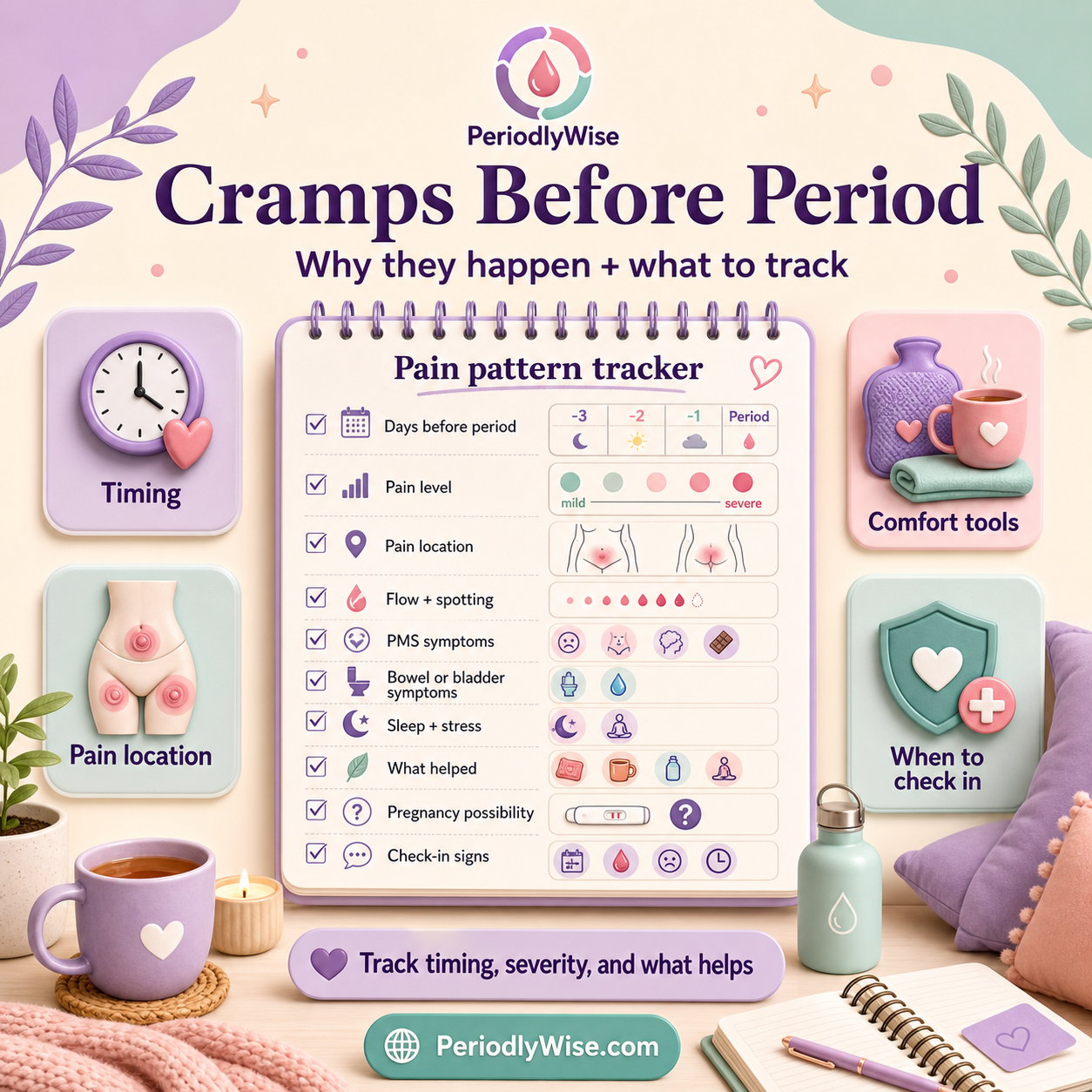
What to track in PeriodlyWise
Tracking cramps before period is most useful when it captures timing and impact, not just "pain yes/no."
| Track | Why it matters | Example note |
|---|---|---|
| Days before period | Shows whether cramps are close to bleeding or start much earlier. | "Cramps began 3 days before flow." |
| Pain severity | Helps compare cycles and decide when pain is escalating. | "6/10 at night, 8/10 day 1." |
| Location | Different patterns matter clinically. | "Lower belly and back; no one-sided pain." |
| Flow and clots | Heavy bleeding plus cramps can change the concern level. | "Heavy day 1, small clots." |
| Bowel or bladder symptoms | Can be relevant when symptoms flare around the period. | "Diarrhea with cramps; pain with bowel movement." |
| Sleep and stress | Can affect pain tolerance and pattern recognition. | "Poor sleep before worst cramps." |
| What helped | Builds a personal care plan. | "Heat helped; stretching worsened pain." |
| Medication used | Shows whether usual care is enough or no longer working. | "Ibuprofen helped for 4 hours." |
| Pregnancy possibility | Important for late periods or unusual cramps. | "Period 4 days late; test planned." |
How PeriodlyWise turns cramp notes into preparation
If cramps usually start one day before bleeding, your period window can become a preparation window. You can keep heat ready, restock products, choose easier meals, avoid overloading the evening, or plan a gentler morning. If cramps are worse with heavy flow, read Heavy Period Causes and track flow alongside pain.
If cramps wake you at night, read Period Cramps at Night. If pain makes work or school hard, read Period Cramps at Work or School. If you are unsure whether pain is ovulation or period timing, read Ovulation Pain vs Period Cramps.
When to get medical help
Seek medical advice if cramps are severe, worsening, new, one-sided, lasting beyond your period, starting many days before bleeding every cycle, causing missed work or school, not improving with safe usual care, or paired with very heavy bleeding, bleeding between periods, bleeding after sex, fever, unusual discharge, vomiting, fainting, dizziness, or pain with sex, bowel movements, or urination.
Seek urgent care if pain is sudden and severe, you may be pregnant, you have heavy bleeding with weakness or fainting, you have shoulder pain or severe one-sided pelvic pain, or you feel unsafe. Pain is common, but suffering through dangerous symptoms is not a menstrual requirement.
FAQ
Are cramps before a period normal?
Mild cramps shortly before bleeding can be normal for many people. Cramps that are severe, worsening, early by several days, persistent after the period, or disruptive deserve medical attention.
Can cramps start before bleeding?
Yes. Prostaglandins and uterine contractions can make cramping begin before visible bleeding. Track when cramps start and whether they ease after bleeding begins.
Can cramps before period mean endometriosis?
They can be one possible clue, especially if pain starts several days before the period, worsens over time, continues after bleeding, or comes with bowel, bladder, sex pain, or life disruption. Only a clinician can evaluate endometriosis.
What should I track if cramps happen before every period?
Track days before bleeding, severity, location, flow, clots, bowel or bladder symptoms, nausea, dizziness, sleep, stress, medicines used, what helped, and whether the pattern is changing.
Use PeriodlyWise to notice when cramps usually begin, what they come with, and what helps, so your next period window includes comfort planning instead of last-minute guessing.
Open the Period Tracker