Some days before a period, your body may not be the only thing that feels off. Your focus may feel softer. Words may come slower. You may reread the same sentence, forget small tasks, lose your train of thought, or feel like your brain is moving through thick air.
Many people call this "period brain fog." It is not a formal diagnosis, but it is a useful phrase for a real experience: feeling less mentally clear before or during your period.
This article keeps the topic grounded. Brain fog can be frustrating, but it does not need to be treated as a mystery every month. Tracking timing, sleep, mood, pain, flow, food, and stress can help you understand whether it follows your cycle.
What does period brain fog feel like?
Period brain fog can show up in small but frustrating ways. You might forget why you opened an app, struggle to concentrate at work or school, misplace things, feel mentally tired earlier than usual, or find normal tasks more effortful.
Some people describe it as feeling slow. Others describe it as scattered, distracted, emotionally overloaded, or unable to hold several thoughts at once. For some, it is mild and passes quickly. For others, it overlaps with irritability, anxiety, low mood, poor sleep, cravings, headaches, cramps, or fatigue.
The important detail is timing. Brain fog that appears in a repeating pre-period window gives you a different clue than brain fog that happens randomly or all month.
Why can focus feel harder before your period?
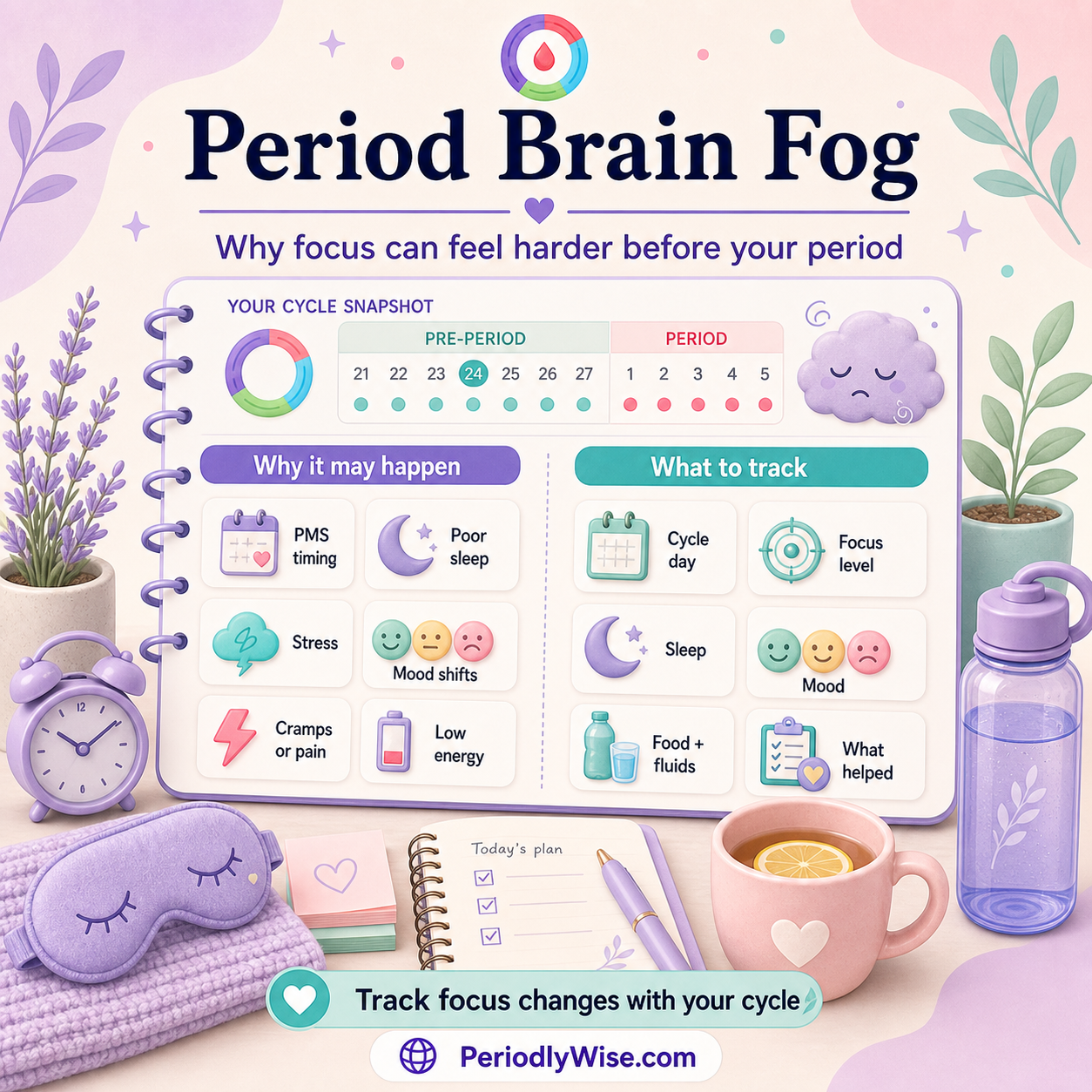
The days before a period can bring several changes at once. Hormone shifts may play a role for some people, but brain fog is rarely just one thing. Sleep disruption, stress, cramps, bloating, headaches, heavier flow, low energy, and mood changes can all make concentration harder.
If you are sleeping badly, eating differently, feeling anxious, or dealing with pain, your brain may simply have less bandwidth. That does not mean you are lazy or not trying hard enough. It means your body is asking for more support than usual.
PMS can include physical and emotional symptoms, and some people notice trouble concentrating or remembering things before their period. If the same pattern repeats for several cycles, it is worth tracking with the rest of your symptoms.
Is brain fog a PMS symptom?
It can be. PMS can include emotional, physical, and mental symptoms, including tiredness, sleep problems, tension, appetite changes, and trouble with concentration or memory. If your brain fog tends to appear in the days before your period and improves once bleeding starts or shortly after, it may be part of your PMS pattern.
But timing matters. If brain fog happens all month, suddenly gets worse, or comes with other worrying symptoms, it may not be cycle-related. A tracker can help you notice that difference without trying to diagnose yourself.
If brain fog appears with anxiety, you may find Period Anxiety Before Your Period helpful. If it appears with irritability or emotional swings, read Period Mood Swings and Irritability.
What should you track?
Track the pattern for a few cycles instead of judging one rough day. You do not need to record every thought. Focus on the details that show timing and possible triggers.
- Cycle day: when brain fog starts and stops.
- Focus level: mild, moderate, or strong.
- Sleep: bedtime, wake-ups, sleep quality, and whether you woke tired.
- Mood: anxiety, irritability, sadness, overwhelm, or tension.
- Pain: cramps, headache, back pain, nausea, or body aches.
- Flow: whether heavy bleeding overlaps with fatigue or weakness.
- Food and fluids: skipped meals, cravings, caffeine, hydration.
- Workload: stress, deadlines, travel, screen time, or long days.
- What helped: rest, a walk, food, water, lighter tasks, reminders, or earlier sleep.
This gives you a clearer picture. You may notice brain fog is worse after poor sleep, during heavy flow, with stronger cramps, or during stressful weeks.
What may help on foggy pre-period days?
Small adjustments can help without turning your whole day into a project. Try writing down important tasks, using reminders, breaking work into shorter blocks, drinking water, eating steady meals, and doing the hardest focus work at the time of day you feel clearest.
If possible, keep demanding tasks away from the day you usually feel most foggy. That will not always be realistic, but even planning one lighter evening or preparing essentials early can reduce pressure.
- Use a short written list instead of relying on memory.
- Do one task at a time when possible.
- Set reminders for appointments, medication, meals, or deadlines.
- Take short breaks before you feel completely drained.
- Eat something steady if you have skipped food.
- Reduce late caffeine if sleep is also getting worse.
- Plan low-pressure tasks for the foggiest day when your schedule allows it.
Gentle movement, fresh air, heat for cramps, and better sleep routines may also help some people. The goal is not perfection. The goal is to make the fog easier to move through.
Brain fog and sleep before your period
Poor sleep can make focus harder the next day, and pre-period symptoms can make sleep lighter or more restless. If brain fog and sleep trouble appear together, track both. You may see that the fog is strongest after a restless night, or that it improves when you protect your bedtime routine.
For more support on this pattern, read Period Insomnia. If tiredness is the main symptom, Period Fatigue may be the better guide.
When should you get support?
Consider support if brain fog is new, severe, getting worse, affecting school or work regularly, or not tied to your cycle. Also seek help if it comes with heavy bleeding, dizziness, fainting, shortness of breath, severe fatigue, depression, panic, or thoughts of self-harm.
If emotional symptoms before your period feel intense or disruptive every month, it may be worth asking about PMS or PMDD support. You do not need to wait until symptoms are unbearable to ask for help.
How PeriodlyWise can help
PeriodlyWise cannot diagnose brain fog, PMS, PMDD, anemia, thyroid issues, sleep disorders, or any medical condition. What it can do is help you place symptoms on a timeline.
Use the Period Tracker to estimate your next period window, then note when focus feels harder. If the pattern repeats, you can prepare for it with reminders, lighter planning, better sleep support, and a clearer explanation if you decide to speak with a healthcare professional.
Use PeriodlyWise to record cycle day, sleep, mood, pain, flow, fatigue, appetite, and what helped so brain fog patterns become easier to see.
Open the Period TrackerFAQ
Is period brain fog real?
Yes, many people describe focus and memory changes around PMS or their period. The phrase is informal, but the experience can be very real.
How long does period brain fog last?
It depends. For some people it lasts a day or two before bleeding. For others it may last through the first days of the period.
Can heavy bleeding make brain fog worse?
Heavy bleeding can overlap with fatigue, weakness, or dizziness, which may make focus feel harder. If heavy bleeding is frequent or affects daily life, it is worth getting medical advice.
Can anxiety before my period cause brain fog?
Anxiety can make concentration harder. If worry, tension, and brain fog appear together before your period, tracking both can help show the pattern.
Should I push through brain fog?
You may need to keep going on some days, but pushing harder is not always the most useful response. Simple supports such as reminders, breaks, food, fluids, sleep, and lighter planning can make the day easier.
Final thoughts
Period brain fog can feel annoying, embarrassing, or hard to explain, but it is worth tracking calmly. Look for timing first. Does it happen before your period, during heavy flow, after poor sleep, with anxiety, or during stressful weeks?
Once you know the pattern, you can plan with more kindness and less self-blame. If brain fog is severe, new, worsening, unsafe, or not limited to your cycle, seek professional support.